Rolls
- Price, VAT incl.
- €25–35/m²
- How it goes in
- Aluminium foil and Volcalis rolls
- When it makes sense
- There is access and you will go back up
- Choose if…
- You will use the attic for storage
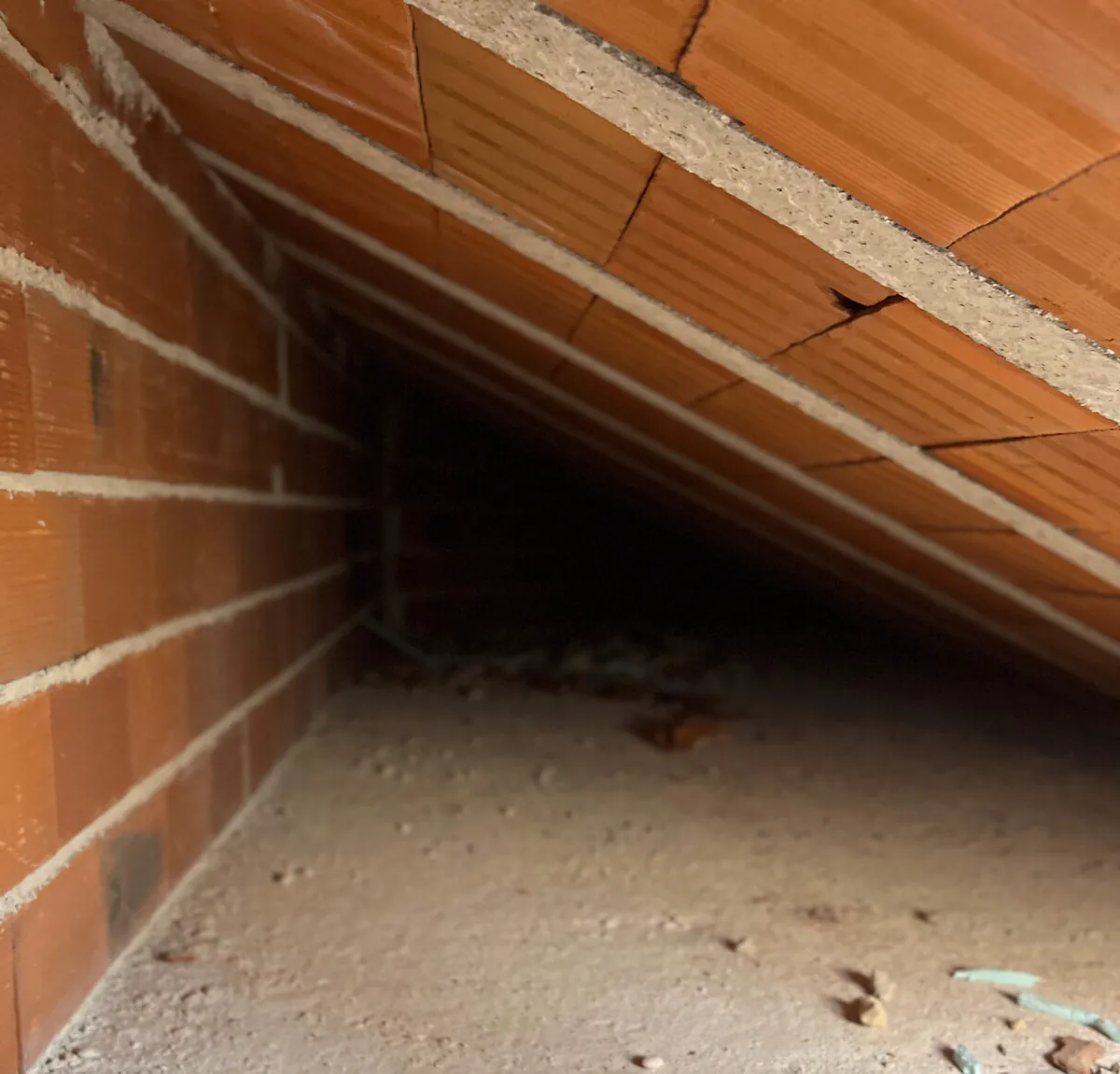
Insulation materials
Isocell cellulose, made from recycled newspaper, blown onto the attic floor slab in one continuous layer. In walls we use mineral wool. See how it looks ↓
By David Francisco, civil engineer at EnergyEase · Updated 1 November 2026
Free, no obligation
Book a free technical visit
We check access to the attic, measure the area and tell you whether cellulose, wool or rolls suit best.
Prefer to talk? 210 270 937 or WhatsApp
We only use your details to book the visit and send the quote.
5.0 on Google
from 56 reviews
Free technical visit
with an inspection camera
Published prices
per m², VAT included
Written quote
free, no obligation
How it looks
We blow the cellulose onto the attic floor. It forms a loose, continuous layer that reaches the corners and goes around the joists.
€30–45/m² incl. VAT · attic floor only · usually 20 cm or more.
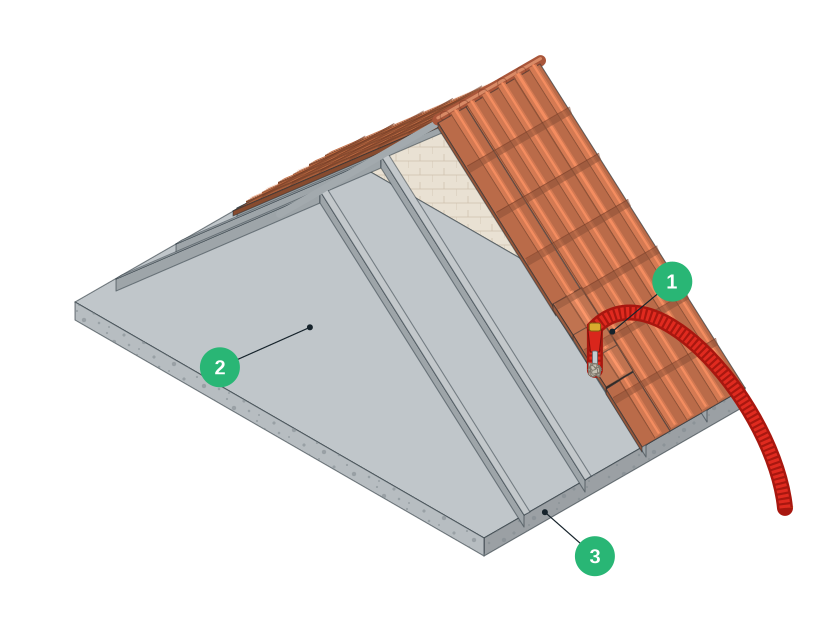
It is a loose layer. Not for walking on: the flakes move.
Attic insulation →Prices include VAT. The final price is the one in the written quote, after the visit.
Three options
Swipe to see more →
Between wool and cellulose there is no single best choice for every home. On the visit we choose with you, based on access, how you use the attic and your preference.
Technical sheet
Blown cellulose
Attic floor, as a loose layer
European Technical Assessment ETA-06/0076. Manufacturer: Isocell, Austria.
Technical sheet (PDF)
Google reviews
5.0from 56 reviews on Google
Swipe for more reviews →
“Good evening. Four months after we insulated the walls and the attic, the thermal comfort in the house has improved a lot.
As for the process, I can only say that everyone involved was more professional than average, very helpful and quick in carrying out the work, meeting the agreed deadlines.”Mario C. · Google, translated from Portuguese
“The team were prompt, knowledgeable, efficient and polite, working around a building site and accommodative to our issues. Great price and service and would recommend to anyone who, like us, had a house with no insulation!! Thanks EnergyEase!!”
SRG77 · Google
“Excellent service from beginning to end! Perfect communication throughout and the team did an excellent job, on time and even below initial budget! Highly recommended!”
Andre L. · Google
We go up into the attic with you, check the access and the slab and propose the layer that makes most sense, with a written quote.
Questions
Another question? Call 210 270 937 or message us on WhatsApp.
A blown attic floor costs €30–45/m², VAT included: for an 80 m² attic, €2,400–3,600. With mineral wool rolls, €25–35/m². The final price is the one in the written quote, after the visit; difficult access or an irregular shape can raise the price per m² a little.
No. In walls we use water-repellent mineral wool, Knauf Supafil 033 or URSA Pure Floc KD. We only use cellulose on the attic floor. See mineral wool.
Usually 20 cm or more. We blow slightly above the final thickness: the Isocell sheet allows 10 % extra for loose layers up to 25 cm, because cellulose settles a little.
In the Isocell declaration of performance, mould resistance is class 0. Even so, the attic must not let water in: a leaking roof has to be repaired before insulating.
Isocell contains mineral fire-protection additives, under 10 %, according to the sheet. Its reaction to fire depends on the thickness applied; we give you the technical sheet.
For storage or frequent access, rolls are better: they stay in place. Cellulose and blown wool are loose flakes, which move if you walk on them.
Na EnergyEase, we are proud to work with cellulose insulation from ISOCELL: a high-performance inflated material made from Recycled newspaper.
More than ecological, cellulose offers exceptional thermal comfort, Sound reduction, fire protection and humidity control, all of this reducing to CO₂ footprint from your home.
Whether for attics, false ceilings or floors, cellulose provides hermetic insulation, flawless, no waste and with long-term durability.
Cellulose is produced from clean newsprint, recycled and shredded into loose fibers, treated with natural mineral salts, conferring properties such as:
🔥 Fire resistance (Euroclass B-s2, d0)
🦠 Resistance to mildew and pests
♻️ Completely biodegradable and recyclable
Unlike mineral wool or rigid foam panels, cellulose is applied dry and adapts to all cavities, creating a continuous, jointless layer, that It does not give way or lose effectiveness over the decades.
With cellulose, your house is warmer in winter, cooler in summer and quieter all year round.
Thanks to your high density and flexible fiber structure, cellulose offers a excellent sound insulation, completely filling the cavities and eliminating hollow spaces that amplify noise.
Cellulose resists mildew and naturally regulates humidity.
Your hair effect enables absorb and release water vapor, without losing insulating capacity.
🧱 Interior works with poor ventilation
🏠 Houses close to the coast or in humid climates such as the north of Portugal
♻️ Made with 100% recycled paper
🌍 Removes up to 1.21 kg of CO₂ per installed kg
🔌 Consumes up to 85% less energy in production What is EPS or mineral wool
🌿 It can be reused, recycled or even transformed into natural fertilizer at the end of the useful life
ISOCELL cellulose is certified with EPD (Environmental Product Declaration) and complies with main European ecological building standards.
We apply cellulose insulation to a wide variety of projects:
The process is fast, clean and accurate: we inflate the fibers through flexible hoses, directly from our machine mounted on a vehicle. The material compresses instantly, forming a dense, airtight blanket: like a warm comforter for your home.
If you are looking for insulation effective, environmentally friendly and ready for the future, cellulose is a choice intelligent and sustainable.
👉 Schedule your free evaluation to find out if cellulose is suitable for your ceilings or attic.
Na EnergyEase, we help build a more comfortable future: naturally.
Don't just take our word for it - hear from those who have experienced the EnergyEase difference.