





Speak to one of our experts
Our insulation experts are ready to discuss the best options to help you have a comfortable, efficient home.
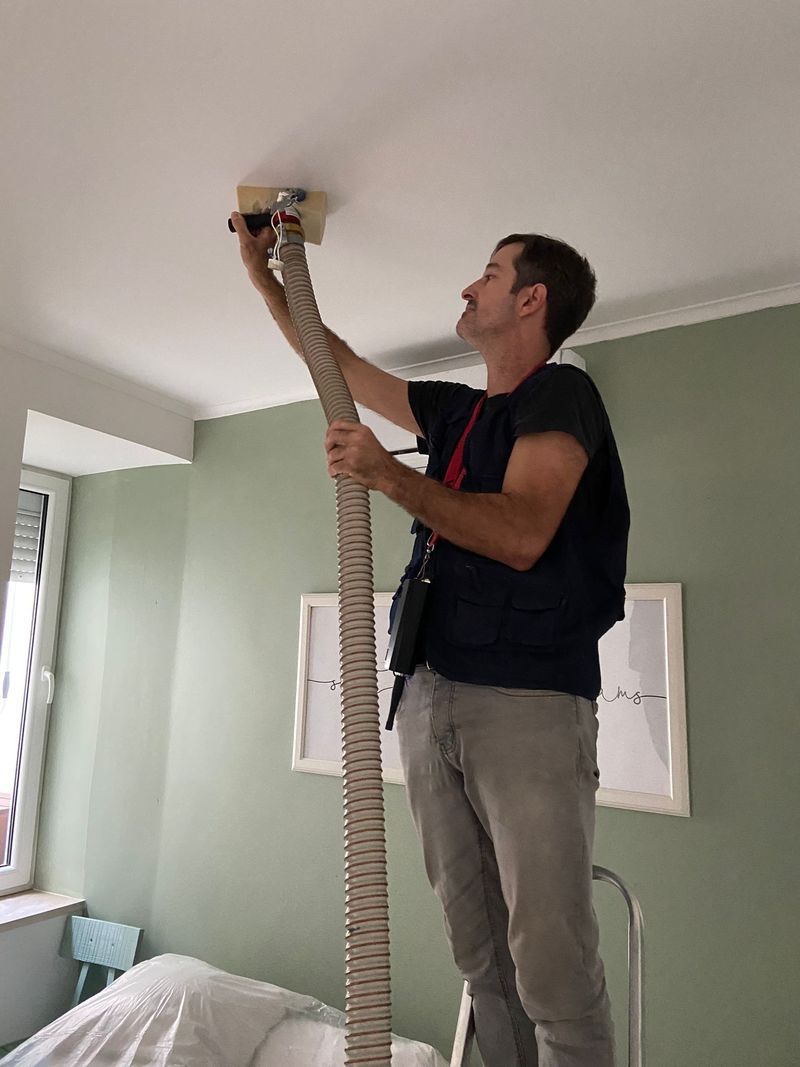
Insulating the ceiling from inside
Above a false ceiling there is almost always an empty space. We fill it with blown mineral wool, in most cases through the existing light openings: the simplest way to insulate a ceiling from inside. It usually costs €30–65/m², VAT included, and we do on average up to 45 m² a day.
By David Francisco, civil engineer at EnergyEase · Updated 18 October 2026
Free and without obligation
Get a quote for your ceiling
We look at the ceiling, measure and send a written quote with the final price. On working days we usually reply within a few hours.
Rather talk? 210 270 937 or WhatsApp
We use your details only to plan the visit and send your quote.
5.0 on Google
from 56 reviews
Free technical visit
we check the ceiling on site
Real prices, published
from finished projects
Written quote
free, with no obligation
Step one
The ceiling decides the solution. Pick the one that looks like yours and see how we do it.
How to recognise it: The ceiling sits below the slab, often with recessed lights, and sounds hollow when you knock on it. The false ceilings we come across usually have 15 to 30 cm of space above.

Price with VAT, often around €45/m²; on a small ceiling the m² costs more. Real example: 93 m² in Lisbon, €2,465. You lose no height and there is no painting job. In most cases we blow through the light openings; if not, we drill a small hole and seal it afterwards.
How we do it →How to recognise it: The ceiling is the slab itself, plastered and painted, and sounds solid. There is nowhere to blow into: we build a new false ceiling with the insulation inside.
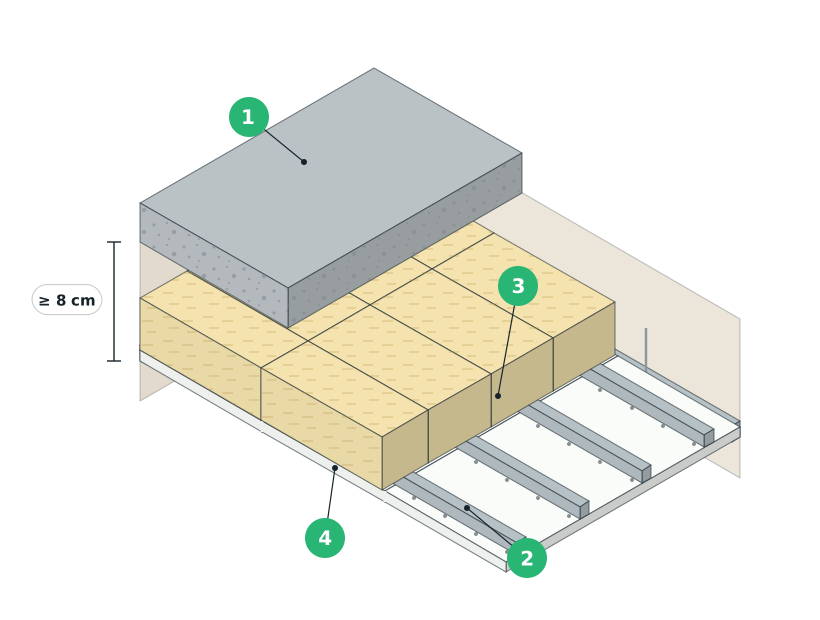
VAT and painting included; a 25 m² room comes to about €2,400. The ceiling drops, usually 15 to 25 cm, and the m² comes down in larger rooms.
When it makes sense →Who it is for
Above you there is only the roof. In summer the heat from the roof comes in through the ceiling; in winter the heat of the house escapes through it.
If you cannot reach the attic floor, going through the false ceiling is how to put insulation between the house and the roof.
The air conditioning or heating works hard and the temperature does not hold. With the ceiling insulated, it stays more stable.
Mineral wool above the ceiling clearly helps against voices and TV from above. Footsteps and knocks travel through the structure and are reduced less.
How we do it
Free
Technical visit
We look at the ceiling and the space above it, measure and confirm it can be blown.
On the day
We take down the lights
In most cases we use the light openings. Where that is not possible, we drill a small hole.
On average up to 45 m² a day
We blow it in
The machine fills the space above the ceiling evenly with mineral wool.
At the end
We put the lights back
We seal any holes, put the lights back and clean up before we leave.

What ends up above your ceiling
A continuous layer of mineral wool on top of the false ceiling, with no joints for heat to slip through. Below, the ceiling stays the same: no new boards and no repainting job. It is the same blown-in insulation we use in walls.
Book the free visit →Finished projects
Blown-in insulation above existing false ceilings, with mineral wool. Totals of accepted quotes, VAT included. The price per m² falls with the area and rises when the space above the ceiling is taller and takes more material.
Want to see the work? See photos in our portfolio.
| Municipality | Area | Total | Per m² |
|---|---|---|---|
| Sintra | 15 m² | €1,272 | €85 |
| Lisboa | 24 m² | €1,043 | €43 |
| Cascais | 85 m² | €4,794 | €56 |
| Almada | 86 m² | €3,373 | €39 |
| Lisboa | 93 m² | €2,465 | €27 |
| Lourinhã | 104 m² | €3,956 | €38 |
Projects finished by EnergyEase. For privacy, municipality only.
Get the price for your ceiling →At the visit we look at the ceiling and the space above it, measure and send a written quote. The visit is free and commits you to nothing.
What moves the price
Travel and setting up the machine cost almost the same on 15 or 100 m². On a small ceiling the m² costs more.
The false ceilings we come across usually have 15 to 30 cm of space up to the slab. The taller it is, the more mineral wool it takes: that is the main reason for the price range.
With well-spread light openings, we blow through them. If there are not enough, we drill small holes and seal them afterwards.
Plasterboard, timber or something else: at the visit we check what is there and whether it can carry the insulation.
No false ceiling
If the ceiling is the concrete slab itself, there is nowhere to blow into. In that case we build a new false ceiling: metal frame, insulation and plasterboard. A 25 m² room takes 3 to 5 days, painted; 80 m², 5 to 7 days. It costs more, but it also renews the ceiling.
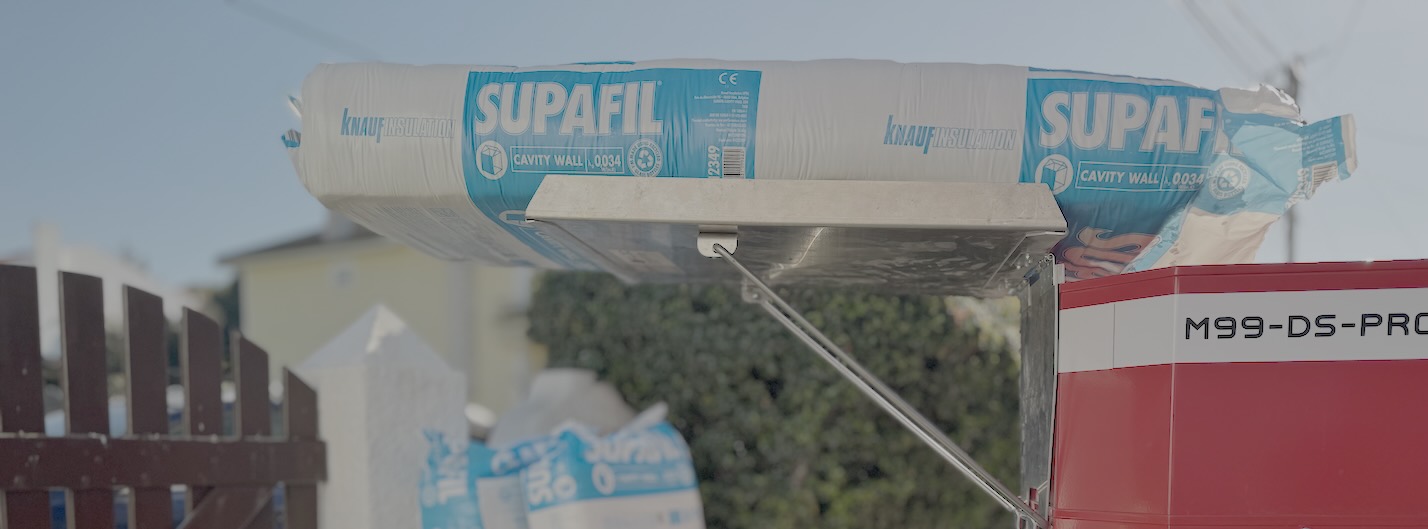
The material: mineral wool that does not burn
In both cases we normally use Knauf Supafil mineral wool: Euroclass A1, non-combustible, and it does not absorb water. We also work with cellulose with a fire-retardant treatment.
Before you decide
Spend less
Do the whole flat at once
Travel and set-up are paid once. On a bigger ceiling, the m² goes down.
Combine ceiling and walls
If the walls have a cavity, we blow everything in the same job.
Compare on the same basis
Price per m², with VAT, and what is included: material, lights, holes sealed.
Visit and quote
The technical visit and the written quote are free, with no obligation.
At the free visit we measure, check what is already there and send the written quote.
“We got to know this material through this company. We explained that we were looking for a material to insulate the (hollow) false ceiling of the first floor of our house, which was always 3 degrees warmer than the ground floor, and that we wanted better control of the temperature and some sound insulation.
The team is great, very friendly, the material was put in very quickly and the house was left spotless at the end, as if nothing had happened.
The results were spectacular and now the whole house has the same temperature.
Thank you very much, I highly recommend them!”Ana B. · Google, translated from Portuguese
“Our experience with Energyease was excellent from the very first minute. Communication was fast, clear and professional. They were always available to answer our questions and doubts. In our case, they insulated our false ceiling with glass wool and installed an acoustic lining wall. The team was extremely professional and careful, and met the agreed deadline to the letter. I highly recommend Energyease.”
Daniel C. · Google, translated from Portuguese
“I was very satisfied with the work. The team insulated the walls and the roof of part of the bedroom, with great care and professionalism.
Besides the quality of the work, I would also like to highlight the excellent finishes: the holes made in the ceiling were completely concealed and the walls were repaired and painted with great care.
The improvement in the bedroom's thermal comfort was very significant. I recommend them without hesitation.”Tomás M. · Google, translated from Portuguese
FAQ
Another question? Call us on 210 270 937 or message us on WhatsApp.
If you already have a false ceiling, blowing insulation in above it usually costs €30–65/m², VAT included, often around €45/m². On a small ceiling the m² costs more. A new insulated false ceiling costs €70–150/m², and the m² drops in larger rooms.
No. In most cases we blow through the existing light openings. Where that is not possible, we drill a small hole and seal it afterwards.
Blowing above an existing false ceiling: on average up to 45 m² a day. A new false ceiling: 3 to 5 days for 25 m², painted, and 5 to 7 days for about 80 m².
To blow above a false ceiling we normally use mineral wool: it is non-combustible (Euroclass A1), does not absorb water and also helps against noise. We also work with cellulose with a fire-retardant treatment. At the visit we tell you which one makes sense in your home.
Yes. In most cases we blow in precisely through the existing light openings and put the lights back at the end. The mineral wool we use is non-combustible (Euroclass A1).
Usually 15 to 25 cm: the metal frame, the plasterboard and the insulation. With more insulation, you lose a little more. If you already have a false ceiling and we only blow above it, you lose no height at all.
If the attic is accessible, insulating the attic floor is almost always cheaper, about €25–45/m². The false ceiling is the answer when there is no access to the attic. See the attic guide.
It clearly helps against noise from above, such as voices, TV or music. Many clients tell us the house became much quieter. Footsteps and knocks travel mostly through the structure and are reduced less.
No. The technical visit and the quote are free and without obligation.
Keep reading
Attic insulation
When the attic is accessible, the cheapest way to insulate from above.
Read more →
Wall insulation
Which wall you have, and which of the three options suits it.
Read more →
Lining walls and ceilings
Insulating from inside with plasterboard, wall by wall.
Read more →
Insulation prices
Price per m² of each technique, from our projects (PT).
Read more →

We insulate ceilings in Lisbon, Cascais, Oeiras, Sintra, Almada and Setúbal
Free technical visit, no obligation
Don't just take our word for it - hear from those who have experienced the EnergyEase difference.


