





Speak to one of our experts
Our insulation experts are ready to discuss the best options to help you have a comfortable, efficient home.
Double walls
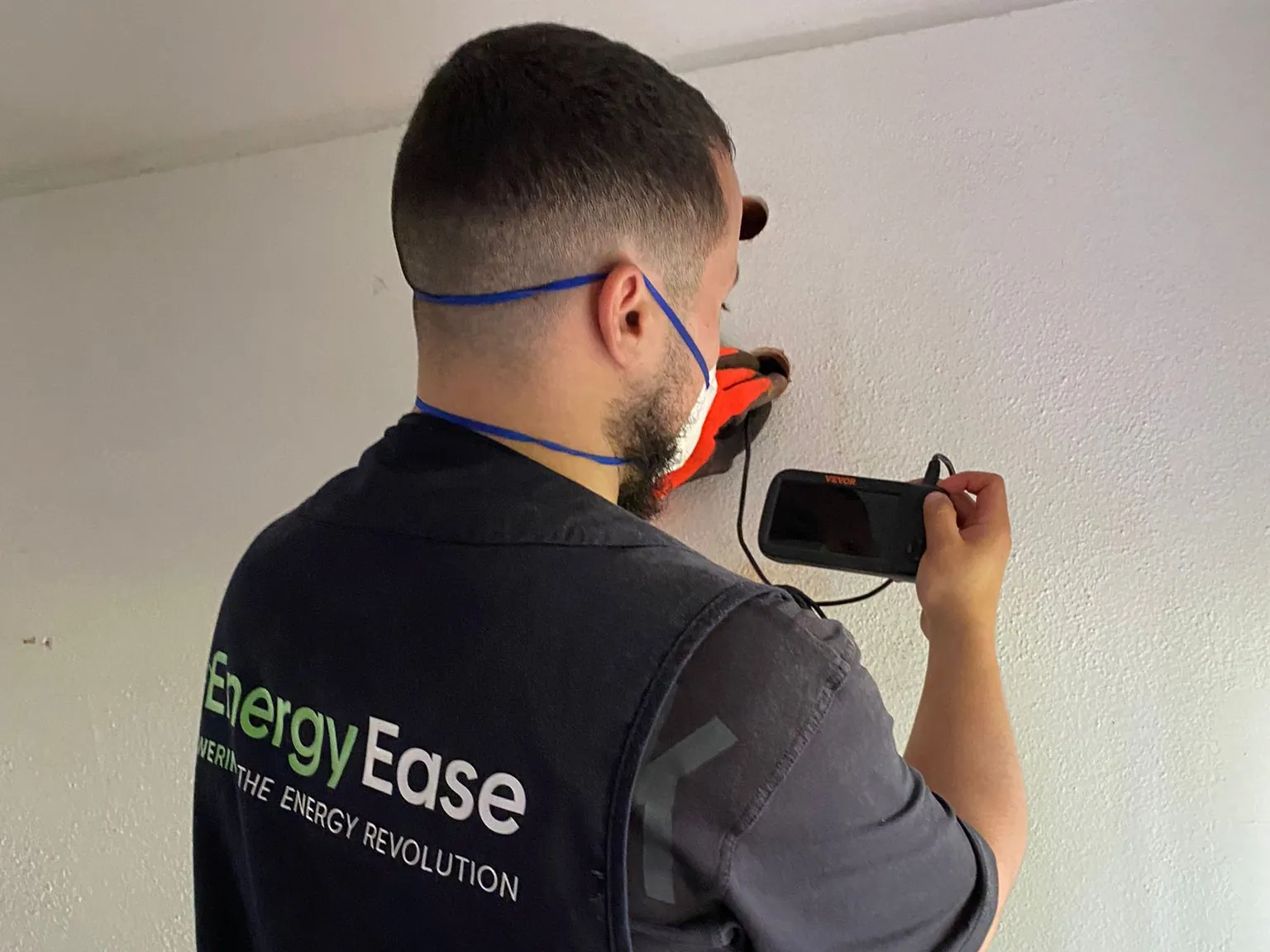
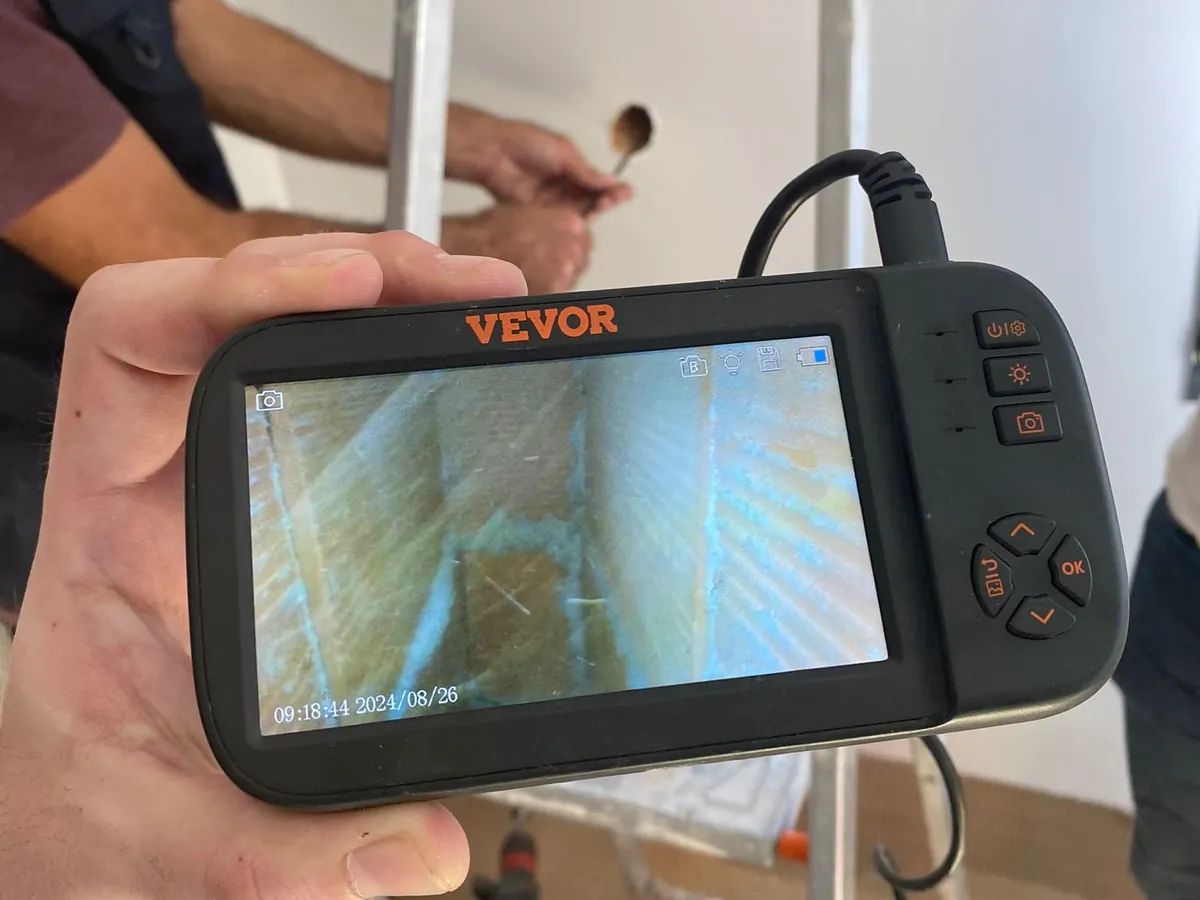
There are signs you can check at home: how thick the wall is, when the building was built, a hole that is already there. But you only know for sure by looking inside. At the free visit, we look into the cavity with an inspection camera. See the 5 signs ↓
By David Francisco, civil engineer at EnergyEase · Published 23 October 2026
Free and without obligation
Book a visit with an inspection camera
We look inside the wall, measure the cavity and send a written quote with the final price.
Rather talk? 210 270 937 or WhatsApp
We use your details only to plan the visit and send your quote.
5.0 on Google
from 55 reviews
Free technical visit
with an inspection camera
Published prices
per m², VAT included
Written quote
free, with no obligation
Free visit
At the visit, you get a clear answer.
One small hole and the camera
We drill a small hole in a discreet spot and pass the inspection camera into the wall.
We measure the width
The cavity needs to be at least 4 cm wide. In most homes we find 5 to 8 cm, sometimes 10 or even 15 cm. We fill those too.
We see what is inside
Rubble, leftover mortar or old insulation boards. If there is too little space or too much rubble, we tell you and suggest another solution.
Damp comes first
If the wall has a damp problem, that problem has to be solved before insulating.
After the visit, you get a written quote with the final price and the timing.
Check at home
Short answer: 30 cm or more, in a building from 1960 to 2006? Then it probably has a cavity. You only know for sure with the camera.
Is the outside wall 30 cm thick or more?At a window opening, plaster included.
Was the building built between 1960 and 2006?Before: often stone. After: already insulated.
In an existing hole, do you see brick, a gap, brick?Air conditioning or extractor. Do not open sockets.
Are there small tubes at the base of the facade?They can drain water from the cavity.
Does the wall sound hollow when you knock?Weak sign: loose plaster also sounds hollow.
Your result
Answer the 5 questions
0 of 5 answered
Your result appears here as you answer.
Book a free visitYou only know for sure with the inspection camera.
Google reviews
5.0
from 55 Google reviews
Get my free quote“I was very satisfied with the work. The team insulated the walls and the roof of part of the bedroom, with great care and professionalism.
Besides the quality of the work, I would also like to highlight the excellent finishes: the holes made in the ceiling were completely concealed and the walls were repaired and painted with great care.
The improvement in the bedroom's thermal comfort was very significant. I recommend them without hesitation.”Tomás M. · Google, translated from Portuguese
“Good evening. Four months after we insulated the walls and the attic, the thermal comfort in the house has improved a lot.
As for the process, I can only say that everyone involved was more professional than average, very helpful and quick in carrying out the work, meeting the agreed deadlines.
I recommend them 100%.
Best regards to the whole team, and in the future I will not hesitate to contact you again.”Mario C. · Google, translated from Portuguese
“The team were prompt, knowledgeable, efficient and polite, working around a building site and accommodative to our issues. Great price and service and would recommend to anyone who, like us, had a house with no insulation!! Thanks EnergyEase!!”
SRG77 · Google
Wall types
Each type of wall has its own solution. Prices per m² of wall, VAT included.
Swipe to see the single and the stone wall →
Double wall
Often 30 cm or more
Mineral wool in the cavity. About half the price of capoto, done in 1 to 3 days. Needs at least 4 cm.
The most complete solution: it also covers pillars and beams. 3 to 6 weeks.
From inside, room by room. 3 to 7 days.
Single wall
Often thinner, no cavity
From outside, with scaffolding and painting. Also covers pillars and beams.
From inside, with painting. 3 to 7 days.
Stone wall
Often 40 cm or more, in old buildings
From inside, with painting. For a 12 m² wall: €2,000 to €3,000.
Prices include VAT: capoto includes scaffolding and painting, the plasterboard wall includes painting. The final price is the one in the written quote, after the visit. See also our wall insulation guide and all insulation prices.
At the free visit we look inside the wall with an inspection camera and tell you what makes sense: blown-in, capoto or an insulated plasterboard wall. No obligation.
FAQ
Another question? Call us on 210 270 937 or message us on WhatsApp.
There are signs you can check at home: an outside wall 30 cm thick or more, a building from the 1960s or later, or two layers of brick visible in a hole that is already there. But these are only hints. You know for sure at the free visit, when we look inside the wall with an inspection camera.
The cavity needs to be at least 4 cm wide. We also fill wide cavities of 15 cm or more. At the visit we measure the width with the inspection camera.
This mostly happens in buildings from 1990 up to 2006. The boards are often XPS and there is often space left. If at least 4 cm is free, we fill the rest. With the camera we see how much space is left and tell you if it can be filled.
Blown-in insulation costs €20 to €45 per m² of wall, VAT included, and is done in 1 to 3 days. We drill holes of about 37 mm, roughly one per m², and close them at the end. Painting the whole wall is optional and quoted separately.
With water-repellent mineral wool, such as Knauf Supafil 033. We do not use cellulose in walls. Cork is possible on request, at a higher price.
Then it cannot be filled. A single brick wall can get capoto (€70 to €100/m², with scaffolding and painting) or an insulated plasterboard wall (€70 to €150/m², with painting). On a stone wall, we build an insulated plasterboard wall. Capoto is the most complete solution, because it also covers pillars and beams.
Not yet. A damp problem has to be solved first. At the visit we look for signs of damp before anything else and tell you what we find.
You can ask us at any moment to check it together with the inspection camera. You can also count the bags of wool used. And you get photos from before and after.
Keep reading

Visits in Lisbon, Cascais, Oeiras, Sintra, Almada and Setúbal
Free technical visit, no obligation
Don't just take our word for it - hear from those who have experienced the EnergyEase difference.


