

5.0 from 51 Google reviews

Lisbon, Cascais and Setúbal

Blown-in insulationWalls insulated in 1 to 3 days

We fill the cavity in your walls with mineral wool through small holes. You lose no space, the façade stays the same and it usually costs €25–45/m², VAT included.

By David Francisco, civil engineer at EnergyEase · Updated 27 September 2026

  • A warmer home in winter and a cooler one in summer
  • From inside or from outside
  • Holes closed at the end, site left clean

“The technicians cleaned up the debris both in the flat and in the entrance hall of the building.”

Tomás F. · Google, translated from Portuguese
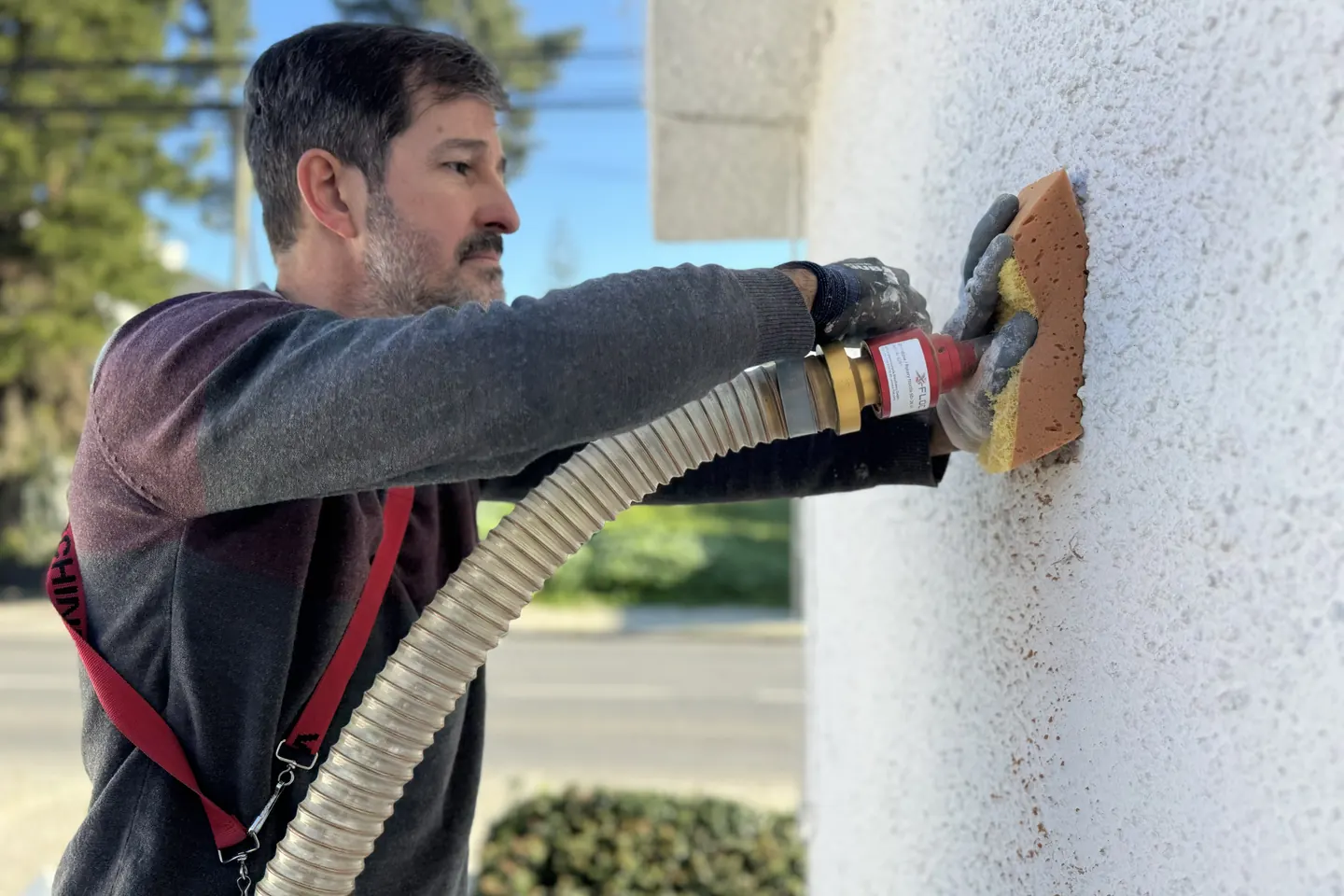
EnergyEase installer blowing mineral wool into the cavity of a wall through a small hole in the façade
On an EnergyEase job: blowing in through the façade
EnergyEase installer blowing mineral wool into the cavity of a wall through a small hole in the façade
On an EnergyEase job: blowing in through the façade

Free, no obligation · We call you within 24 h

Get a quote for your walls

Rather talk? 210 270 937 or WhatsApp

We use your details only to plan the visit and send your quote.

5.0 on Google

from 51 reviews

Free technical visit

with an inspection camera

Published prices

per m², VAT included

Written quote

usually within 48 h

What it is

What is blown-in insulation?

Many homes in Portugal have cavity walls: two leaves of brick with an empty air gap in between. Blown-in insulation, also called injected or cavity wall insulation, fills that gap with mineral wool flakes, blown in by a machine through small holes. The wall is insulated over its full height: your home stays warmer in winter and cooler in summer, without losing any space.

€25–45/m² incl. VAT · 1 to 3 days · cavity from 4 cm. Is my wall suitable? →

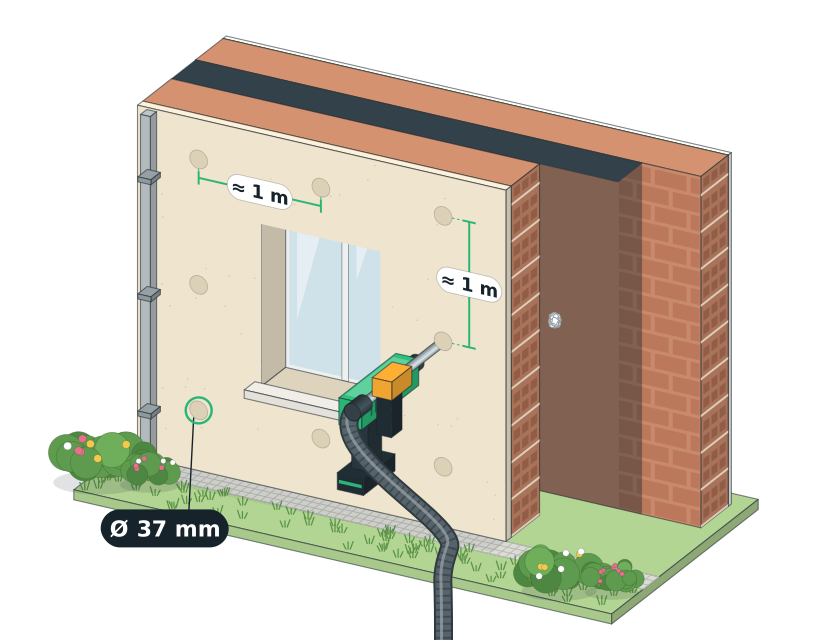
Animation of a cavity wall seen from outside: a 37 mm hole is drilled in the façade, then the others, about one per square metre; the nozzle blows in mineral wool and the cavity, visible in the cut-away, fills from the bottom up; at the end the holes are closed.
Illustration · wall thickness exaggerated

From outside, through the façade

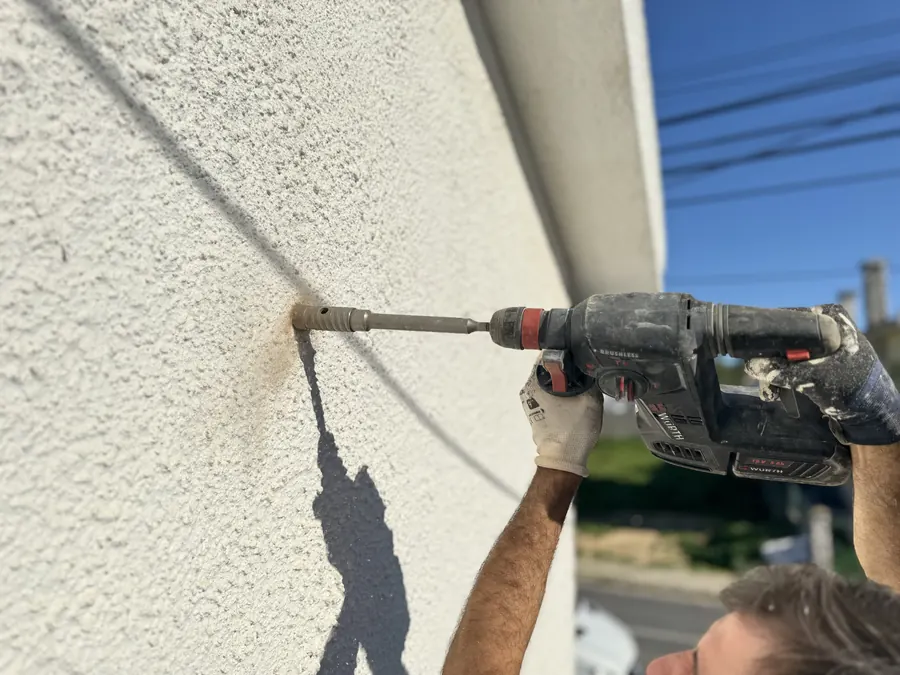
  1. 37 mm holes in the façade, about one per m²
  2. Inside the house you hardly notice anything apart from the drilling
  3. We are done quickly and leave the holes closed

Best for: Houses and apartment buildings, when you want every wall insulated without work inside the home.

Keep in mind: The holes are closed, but they show until the façade is painted. Painting the façade afterwards is a separate job and makes the project a bit more expensive and complex.

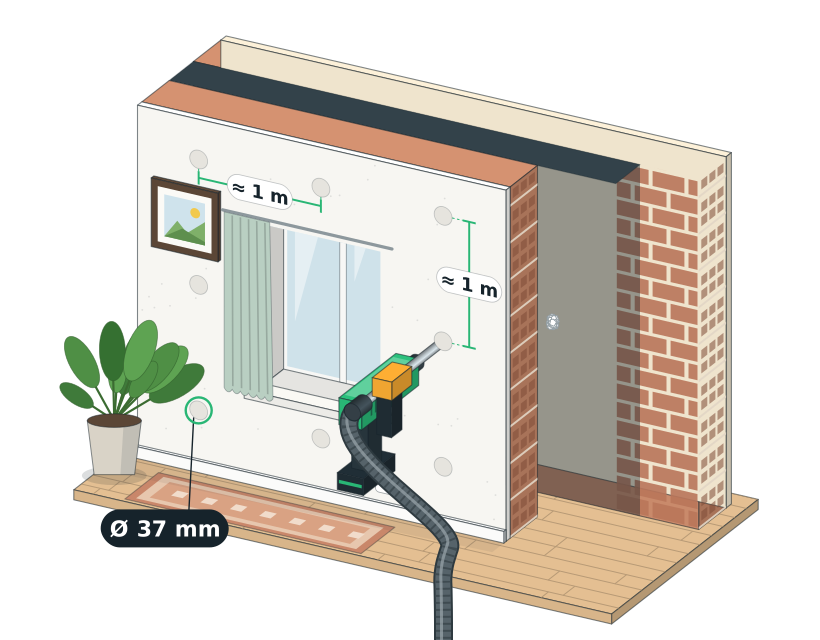
Animation of a cavity wall seen from inside the home: a 37 mm hole is drilled in the inside wall, then the others, about one per square metre; the nozzle blows in mineral wool and the cavity, visible in the cut-away, fills from the bottom up; at the end the holes are closed.
Illustration · wall thickness exaggerated

From inside the home

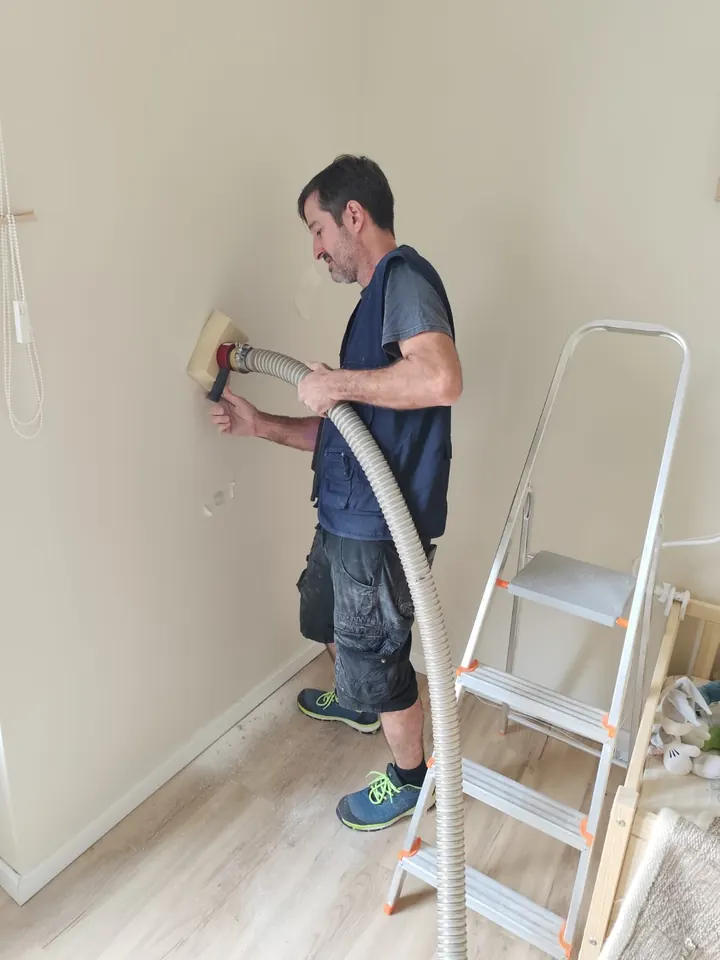
  1. 37 mm holes in the inside wall, about one per m²
  2. The façade stays exactly as it is
  3. You can insulate just one room, or just your flat

Best for: Flats, or when you only want one or two rooms insulated, without having to paint the whole façade.

Keep in mind: We work inside your home and clean up at the end. The holes are closed; painting the walls inside is a separate job.

How we do it

From the visit to an insulated wall, in four steps

  1. Free

    We look inside the cavity

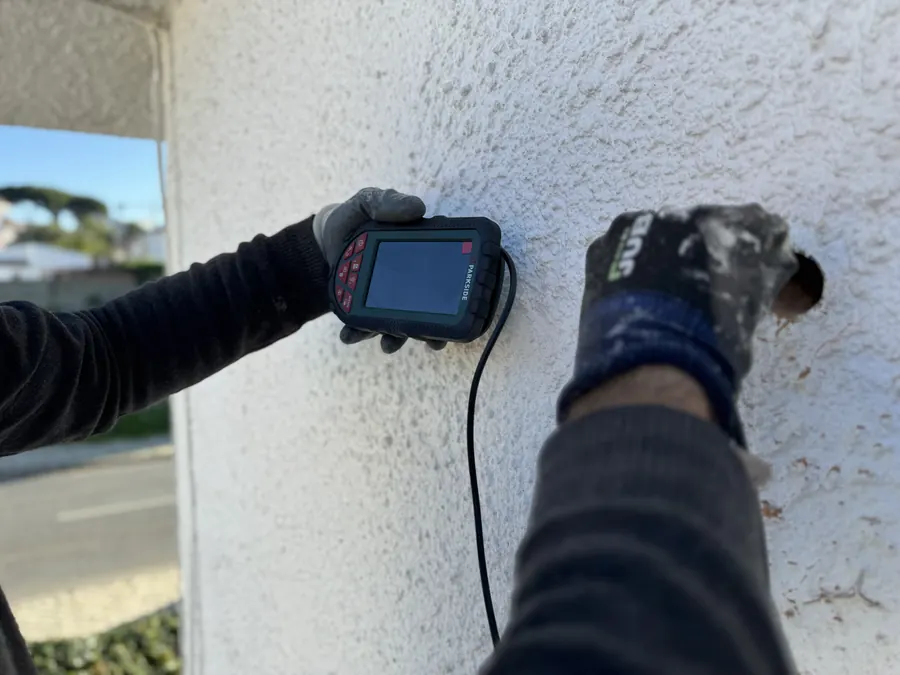
    At the technical visit we drill a small hole and look inside the wall with a camera: whether there is a cavity, how wide it is and whether it is empty.

  2. 37 mm holes

    We drill the wall

    About one hole per m², about 1 m apart, from outside or inside. We decide together where.

  3. 1 to 3 days

    We blow in the wool

    The machine blows mineral wool through each hole and the cavity fills from the bottom up, at the density the manufacturer specifies.

  4. Included

    We close the holes

    We close every hole and clean up before we leave. Painting the whole façade or wall is a separate job, which we quote if you want.

EnergyEase installer looking inside a wall with an inspection camera
Step 1Camera in the cavity
Drill making a 37 mm hole in the façade
Step 2A 37 mm hole
Installer blowing mineral wool into a wall from inside the house
Step 3Blowing from inside
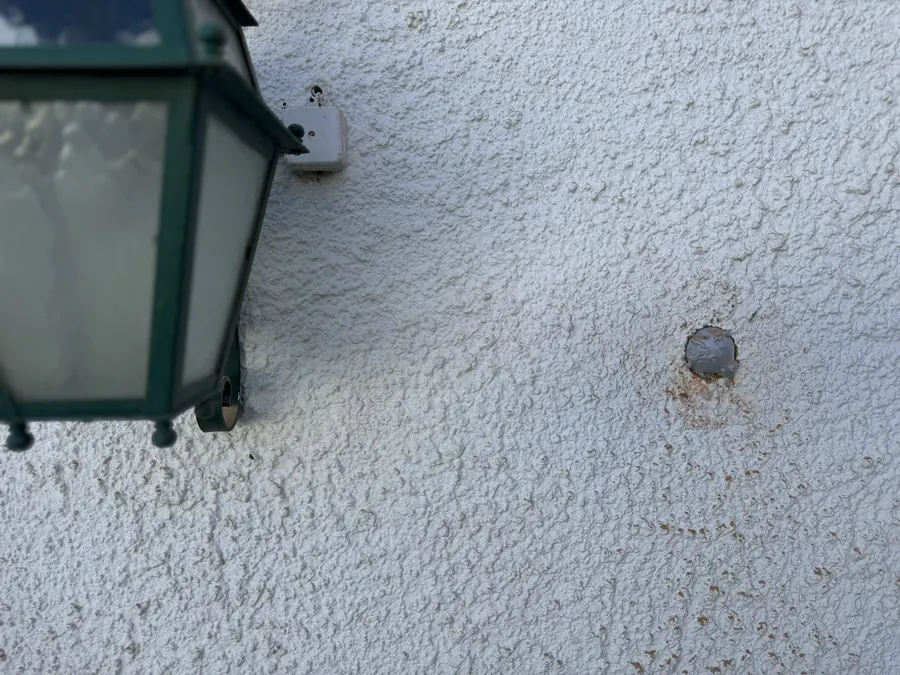
Closed hole in the façade, ready to paint
Step 4Hole closed

A typical home is done in 1 to 3 days. On the first day we do about 50 m² while we set everything up; after that 100 to 150 m² a day, depending on the width of the cavity.

Google reviews

What clients say about working with us

5.0

from 51 Google reviews

Get my free quote

“I contacted EnergyEase to blow insulation into the outside walls of my flat. […] The work was done within the estimated schedule and, at the end, the technicians cleaned up the debris both in the flat and in the entrance hall of the building.”

Tomás F. · Google, translated from Portuguese

“[…] I would also like to highlight the excellent finishes: the holes made in the ceiling were completely concealed, and the walls were repaired and painted with great care.”

Tomás M. · Google, translated from Portuguese

“Four months after we insulated the walls and the attic, the thermal comfort in the house has improved a lot. […] Very helpful and quick in carrying out the work, meeting the agreed deadlines.”

Mario C. · Google, translated from Portuguese

Before you ask for a quote

Which walls we can fill

Blown-in insulation needs a cavity. If you do not know what you have, that is fine: we check with the camera at the visit.

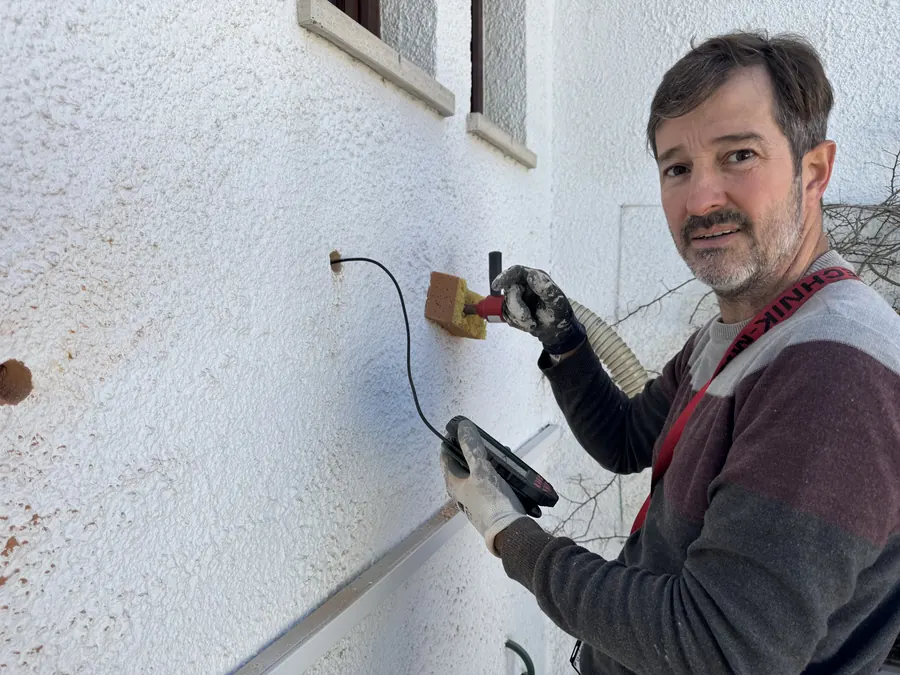
EnergyEase installer checking inside a wall with the inspection camera, through a small hole
At the visit: the camera shows whether there is a cavity

Suitable

Cavity wall with an empty air gap

  • Two leaves of brick or block with an air gap of 4 cm or more. Wide cavities can be filled too.
  • Houses and flats: many homes in Portugal have walls like this.
  • From outside or inside: if you cannot touch the façade, we blow from inside.
  • Façade and joints in good condition, with no unresolved leaks.

Not suitable

In these cases we suggest another solution

  • Solid wall, no cavity: capoto outside or a lining wall inside.
  • Stone wall: an insulated lining wall inside.
  • An air gap under 4 cm, or full of debris.
  • Damp or leaks: first the cause is fixed, then we insulate.

Not sure which wall you have? See how to tell in the wall insulation guide. We also blow insulation into false ceilings and attic floors.

The material

Mineral wool made for cavity walls

In walls we almost always use Knauf Supafil 033: glass mineral wool flakes, developed to fill the cavities of existing walls.

Mineral wool flakes in a hand, ready to be blown in

What the data sheet says

  • Non-combustibleEuroclass A1, the best reaction-to-fire class
  • Water-repellentIt repels water that reaches the outer leaf
  • Vapour-openThe wall keeps drying out (class MU1)
  • Does not settleSettlement class S1: under 1%
  • InsulatesThermal conductivity of 0.033 W/(m·K)

Source: Knauf Insulation, Supafil Cavity 033

What about cellulose or cork?

  • Cellulose: not in walls. The outer leaf gets rain, and cellulose absorbs that moisture, clumps and loses its insulating value. We use it in false ceilings and attics, where it stays dry.
  • Cork: on request. If you want a bio-based solution and do not want capoto, we can also blow in cork. It costs more than mineral wool.

The usual doubts

Does filling the cavity bring in damp?

It is the question we hear most, and a fair one. The short answer: with the right material and a wall in good condition, no.

"The cavity needs to breathe"

A study by Delft University of Technology commissioned by the Dutch government, where cavities have been filled for decades, concluded that with a suitable material the risk of rain getting through does not increase, and that ventilating the cavity helps very little. See the study

"What if there is damp already?"

Then the cause is fixed first: open joints, cracks, gutters or a leak. We only insulate a dry wall. At the visit, the camera shows us the state of the cavity.

Apartment buildings

A building in Cascais, from scaffolding to a painted façade

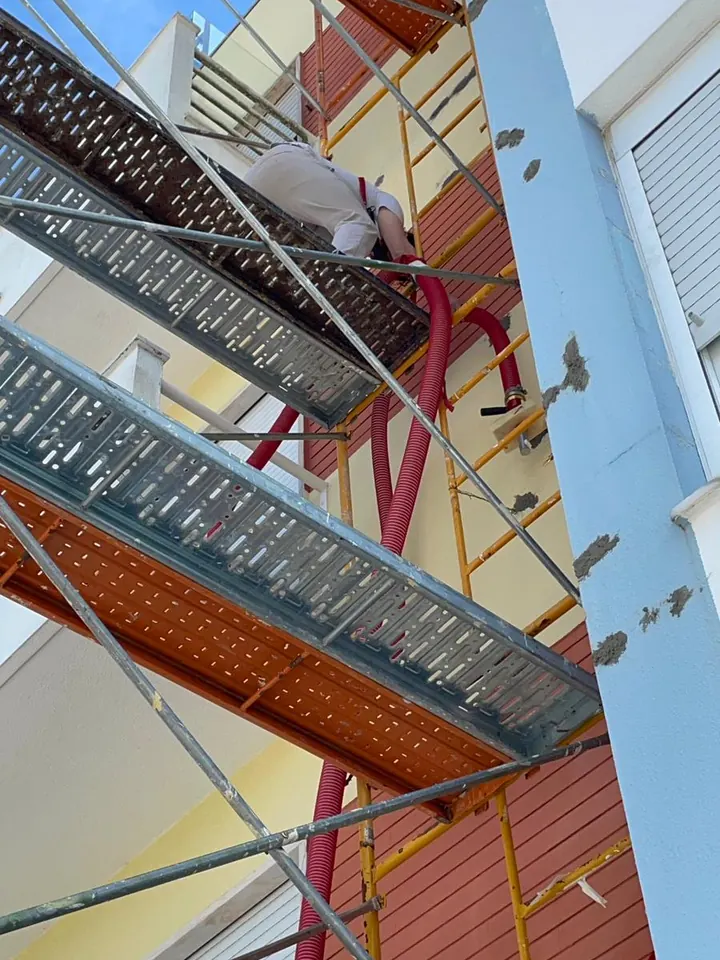
Blowing hose running up the scaffolding of an apartment building
Step 1Blowing from the scaffolding
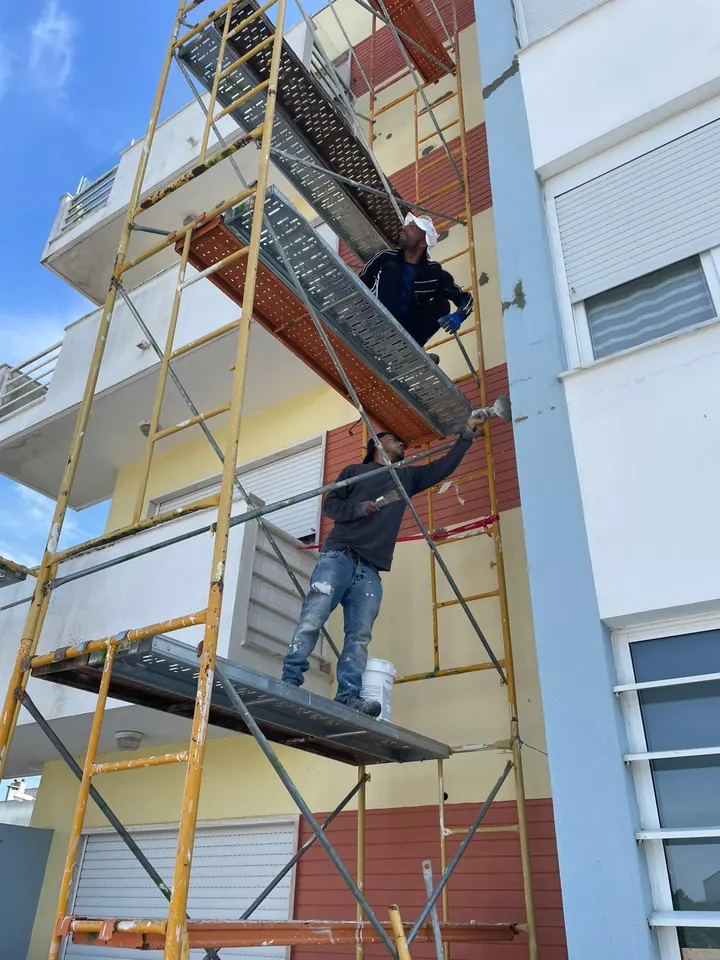
Two workers closing the holes in the façade with mortar
Step 2Closing the holes
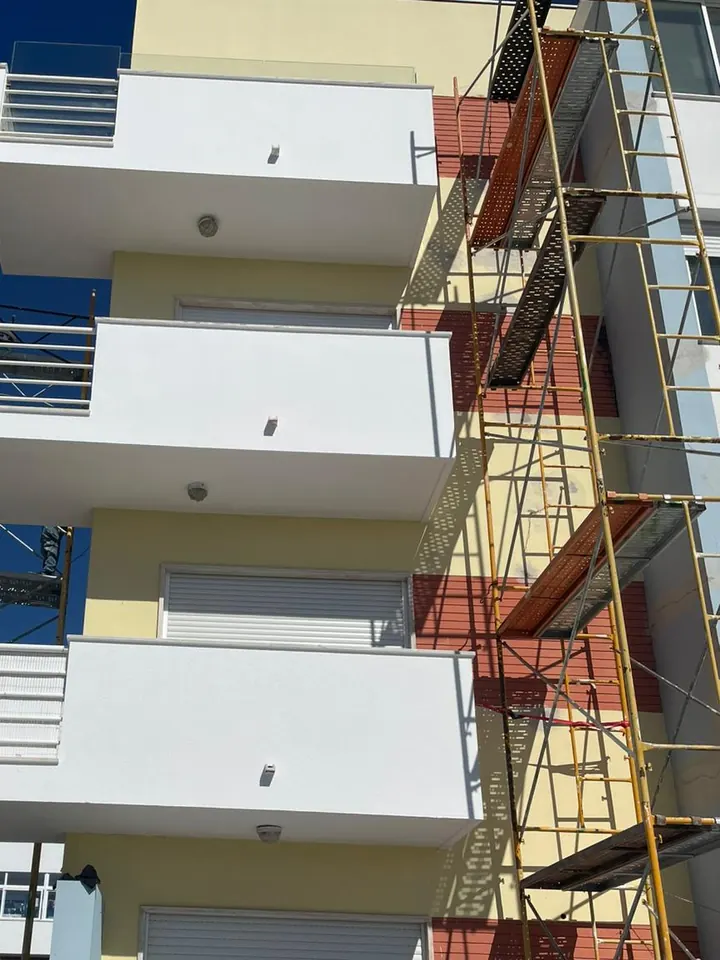
The building façade after painting, with no holes visible
Step 3Façade painted

In an apartment building

In this building we filled the walls through the façade, from the scaffolding, closed the holes and the façade was painted afterwards. In a flat we can also fill just your own walls, from inside or outside. At the visit we tell you what needs the approval of the other owners.

Price

Blown-in insulation prices per m²

Figures from our cavity wall projects in 2025 and 2026, VAT included, holes closed. Area matters most: travel and set-up cost almost the same on 20 or 200 m².

Typical home

€25–45/m²

The most common range for a house or a flat. The median across 67 projects was €38/m².

Large walls

€18–32/m²

With more than 150 m² of wall, the m² comes down.

Small walls

~€62/m²

Under 40 m², the median goes up. Adding more walls, or the false ceiling, brings the m² down.

See the table of finished projects by municipality in the wall insulation guide and the prices of every technique on insulation prices (PT). The final price comes in the written quote, after the visit.

To bring the m² down

Do the whole house at once and combine walls, false ceiling and attic in the same job: travel and set-up are paid only once.

Paying in instalments

You can pay in instalments, subject to approval by Cetelem. See the conditions and an example in the calculator.

EnergyEase, Lda. is an ancillary credit intermediary (intermediário de crédito a título acessório), registered with Banco de Portugal under no. 0008318, acting on behalf of Cetelem, a brand of BNP Paribas Personal Finance, S.A. – Sucursal em Portugal (Banco de Portugal registration no. 848). EnergyEase does not grant credit.

Want your walls insulated before winter?

At the free visit we look inside the wall with a camera, measure and send a written quote, usually within 48 hours. No obligation.

Compare

Blown-in or capoto?

We do both. Capoto is the most complete solution; blown-in is the more affordable alternative when the wall has a cavity.

Capoto (ETICS)

The most complete insulation

€70–130/m² · 3 to 6 weeks

  • It wraps the whole façade and cuts the thermal bridges: pillars, beams and slab edges.
  • It works on any wall, with or without a cavity.
  • The façade ends up new. Price with VAT, scaffolding and painting.

Blown-in

The alternative when there is a cavity

€25–45/m² · 1 to 3 days

  • About half the price of capoto, and done in days rather than weeks.
  • It does not change the look of the façade and you lose no space inside.
  • It needs a cavity of at least 4 cm.

Capoto: price per m² and timings → Blown‑in or capoto: how to decide →

FAQ

Frequently asked questions about blown-in insulation

Another question? Call us on 210 270 937 or message us on WhatsApp.

What is blown-in insulation?

It means filling the cavity of an existing cavity wall with insulation. A machine blows mineral wool flakes through 37 mm holes until the cavity is full. It is also called injected insulation or cavity wall insulation.

How much does blown-in insulation cost?

In a typical home, €25–45 per m² of wall, VAT included, holes closed. With more than 150 m² of wall the m² comes down to €18–32; on small walls, under 40 m², it goes up.

How do I know if my wall has a cavity?

At the free technical visit we drill a small hole and look inside the wall with a camera. That tells us whether there is a cavity, how wide it is and whether it is empty.

How long does it take?

A typical home is done in 1 to 3 days. On the first day we do about 50 m², then 100 to 150 m² a day.

Can it cause damp in the wall?

With the right material and a wall in good condition, no. The mineral wool we use is water-repellent and vapour-open, and a study by Delft University of Technology concluded that with a suitable material the risk of rain getting through does not increase. If there is damp already, the cause is fixed first.

Does the wool settle over time?

Blown in at the density the manufacturer specifies, no. The wool we use has settlement class S1: under 1%.

Will the holes show?

The 37 mm holes are closed, and that is included in the price. To make them invisible, the wall is painted over; painting is quoted separately.

Can I insulate just my flat?

Yes. We can fill just your own walls, from inside or outside. At the visit we tell you what needs the approval of the other owners.

Is blown-in or capoto better?

Capoto is the most complete, because it wraps the whole façade and cuts the thermal bridges, but it costs €70–130/m² and takes weeks. If the wall has a cavity, blown-in costs about half and is done in days.

Why do you not use cellulose in walls?

Because the outer leaf of the wall gets rain, and cellulose absorbs that moisture, clumps and loses its insulating value. In walls we use water-repellent mineral wool; cellulose is for false ceilings and attics.

Do you charge for the visit or the quote?

No. The technical visit, with the camera, and the quote are free and without obligation. The written quote usually follows within 48 hours.

We fill cavity walls in Lisbon, Cascais, Oeiras, Sintra, Almada and Setúbal

Free visit, quote usually within 48 hours

Get my free quote
Thank you! Your submission has been received!
Oops! Something went wrong while submitting the form.
Information

Blown-in insulation

🧱 O que é isolamento insuflado?

A técnica de isolamento que está a mudar a forma como reabilitamos edifícios

O termo “isolamento insuflado” ainda é pouco conhecido em Portugal.
Mas na Europa Central, trata-se de uma das técnicas mais utilizadas em projetos de reabilitação energética.

Neste artigo, explicamos:

  • o que é o isolamento insuflado (também chamado de “injetado”)
  • como funciona na prática
  • onde pode ser aplicado
  • e porque pode ser uma solução ideal para muitas obras, sem necessidade de obras molhadas

🔍 O que significa "isolamento insuflado"?

Isolamento insuflado (ou isolamento injetado) é uma técnica que permite aplicar material isolante em cavidades já existentes nas paredes ou pisos de um edifício.

O material — normalmente lã mineral ou celulose — é insuflado com pressão controlada para preencher o espaço vazio entre paredes duplas ou sob o pavimento do sótão.

🧱 Como funciona?

  1. Identificação da cavidade
    A equipa técnica avalia se existe uma câmara de ar entre paredes (muito comum em edifícios construídos entre 1950 e 2000).
  2. Aberturas mínimas
    Pequenos furos (geralmente 2 a 4 cm) são feitos na parede — pelo exterior ou interior — em pontos estratégicos.
  3. Insuflação do material
    Através desses pontos, é insuflado o material isolante até preencher todo o espaço com densidade controlada.
  4. Fecho e acabamento
    Os furos são selados e, se necessário, a parede é retocada com tinta ou reboco.

🧰 Onde pode ser aplicado?

  • Paredes duplas com câmara de ar (sem isolamento)
  • Sótãos ou entrepisos com espaço técnico
  • Edifícios habitados, sem necessidade de desocupação
  • Projetos de reabilitação urbana, onde obras molhadas ou capoto não são viáveis

✅ Quais são as vantagens?

  • Sem obras pesadas: não é necessário demolir ou remover revestimentos
  • Execução rápida: a maioria das casas fica isolada em 1 a 3 dias
  • Melhoria imediata do conforto térmico e acústico
  • Redução de perdas energéticas → menor consumo de aquecimento ou ar condicionado
  • Solução discreta, ideal para edifícios com fachadas protegidas

❓“Insuflado” ou “injetado” — há diferença?

Não.
Na prática, são dois nomes para a mesma técnica.

“Insuflado” é o termo técnico mais usado a nível europeu.
Mas “injetado” também aparece em Portugal, sobretudo entre empresas que estão agora a descobrir esta solução.

Na EnergyEase, usamos “isolamento insuflado” — e somos especialistas nesta técnica.

💬 Conclusão

Se trabalha em construção, reabilitação ou eficiência energética, vale a pena considerar o isolamento insuflado.

É uma solução:

  • técnica
  • limpa
  • reversível
  • e altamente eficaz para edifícios existentes

Quer saber se um edifício pode ser isolado com esta técnica?

➡️ Fale connosco para uma avaliação técnica gratuita.

‍

Testimonials

Read Our Happy Google Reviews

Don't just take our word for it - hear from those who have experienced the EnergyEase difference.

Classificação de 5 estrelas no Google
I am very satisfied with the results so far. The change was noticeable right after the completion of the intervention.
João Baptista
Setubal, Portugal
Icon
Excellent result, completely satisfied.
Maria Ribeiro
Lisbon, Portugal
Icon
Everything went as expected. The team was extremely professional, careful, and especially attentive to daily cleaning after finishing the work. Small details that make a difference. Communication was always easy and flawless. I would hire them again—highly recommended.
Andreia Ferreira
Setubal, Portugal
Icon
Icon