
5.0 from 51 Google reviews

We do all three

Alternatives to capotoBlown-in, ETICS or a lining wall: which to choose

If your walls have a cavity, the alternative to capoto (ETICS) is blown-in insulation: it costs about half the price, or less, and is done in 1 to 3 days, without changing the façade. Capoto is still the most complete insulation, because it wraps the whole façade.

By David Francisco, civil engineer at EnergyEase · Updated 27 September 2026

  • Prices incl. VAT from projects we did
  • Days instead of weeks
  • We tell you which one suits your wall

“Very helpful and quick in carrying out the work, meeting the agreed deadlines.”

Mario C. · Google, translated from Portuguese
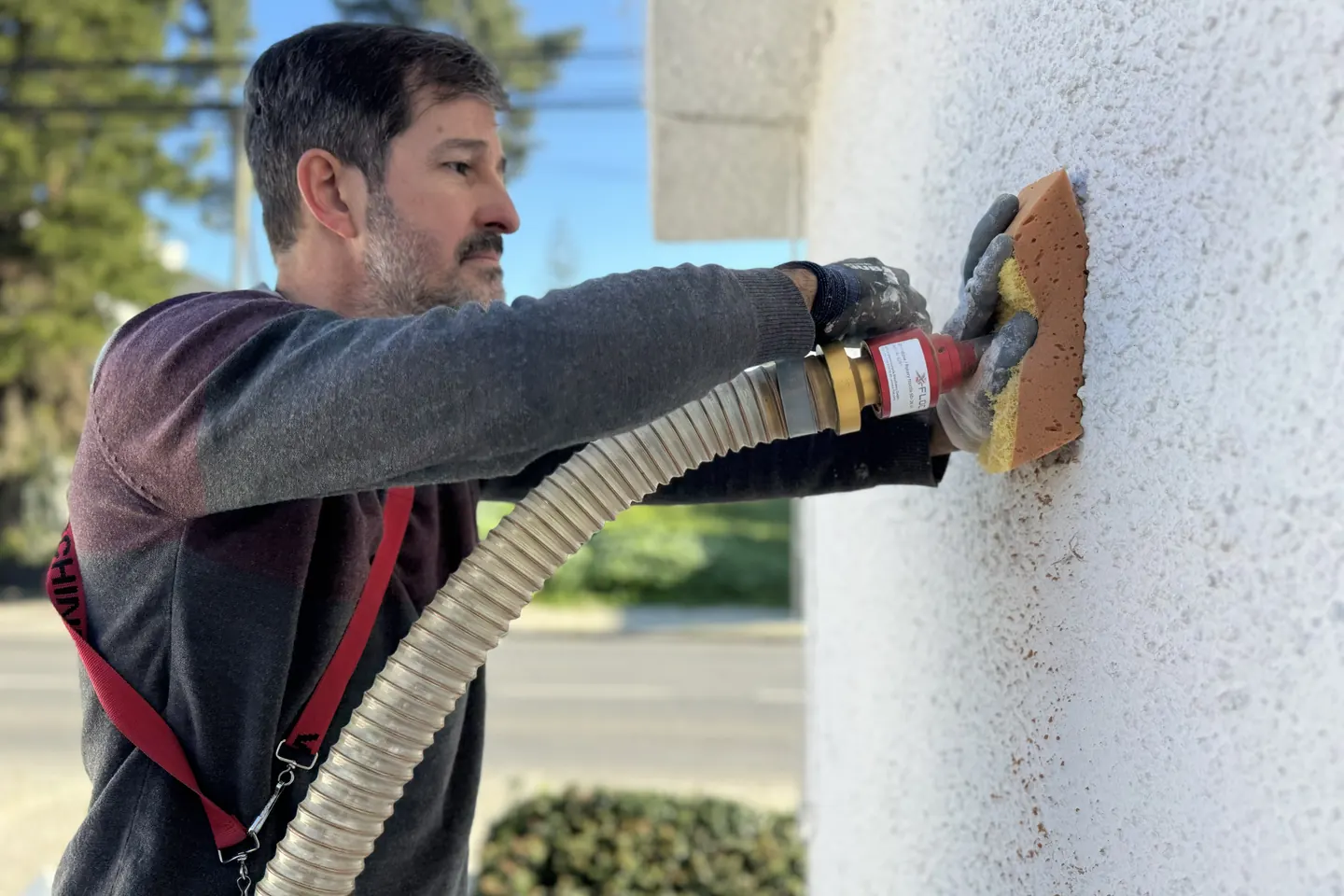
EnergyEase installer blowing mineral wool into the cavity of a wall through a small hole in the façade
Blown-in: the façade stays as it is
EnergyEase installer blowing mineral wool into the cavity of a wall through a small hole in the façade
Blown-in: the façade stays as it is

Free, no obligation · We call you within 24 h

A quote for capoto or blown-in

Rather talk? 210 270 937 or WhatsApp

We use your details only to plan the visit and send your quote.

5.0 on Google

from 51 reviews

Free technical visit

with an inspection camera

Published prices

per m², VAT included

We do all three

capoto, blown-in and lining walls

Side by side

Capoto, blown-in and lining walls compared

Prices incl. VAT from our 2025 and 2026 projects. Capoto is the benchmark; next to it, the two alternatives.

Comparison

Outside

Capoto (ETICS)

In the cavity

Blown-in insulation

Inside

Insulated lining wall

Price per m², incl. VAT€70–130€25–45€80–200
Example: 100 m² of façade€7,000–13,000€2,500–4,500Rarely used for a whole house: usually one or two rooms
Duration, typical house3 to 6 weeks1 to 3 days3 to 7 days
Which wallAny outside wallCavity wall with a gap of 4 cm or moreAny wall, stone included
What it insulatesThe whole façade, including pillars, beams and slab edgesThe wall, through its cavityThe inside face of the wall
The façadeIt ends up new, with new render and colourIt stays the same; the holes are closedIt stays the same
Who decidesIt changes the façade: in a building the owners decide, and the Câmara may need to be involvedIt does not change the façade: in most cases, flat by flatWork inside the home, flat by flat

Outside

Capoto (ETICS)

Price per m², incl. VAT
€70–130
Example: 100 m² of façade
€7,000–13,000
Duration, typical house
3 to 6 weeks
Which wall
Any outside wall
What it insulates
The whole façade, including pillars, beams and slab edges
The façade
It ends up new, with new render and colour
Who decides
It changes the façade: in a building the owners decide, and the Câmara may need to be involved

In the cavity

Blown-in insulation

Price per m², incl. VAT
€25–45
Example: 100 m² of façade
€2,500–4,500
Duration, typical house
1 to 3 days
Which wall
Cavity wall with a gap of 4 cm or more
What it insulates
The wall, through its cavity
The façade
It stays the same; the holes are closed
Who decides
It does not change the façade: in most cases, flat by flat

Inside

Insulated lining wall

Price per m², incl. VAT
€80–200
Example: 100 m² of façade
Rarely used for a whole house: usually one or two rooms
Duration, typical house
3 to 7 days
Which wall
Any wall, stone included
What it insulates
The inside face of the wall
The façade
It stays the same
Who decides
Work inside the home, flat by flat

Capoto includes scaffolding and painting; blown-in includes closing the holes; lining walls exclude painting. Lining walls do not compare well per m²: they are mostly done on small areas, where the m² goes up. Capoto price tables from 2020 still circulate online, many covering materials only; these are prices of complete jobs. The final price comes in the written quote, after the visit.

The most chosen alternative

Why blown-in is the alternative to capoto

When the wall has a cavity, four reasons weigh more than anything else.

Half the price, or less

€25–45/m² against €70–130/m² for capoto, VAT included. On a 100 m² façade: about €2,500–4,500 against €7,000–13,000.

Days instead of weeks

On a façade of about 200 m², blown-in is done in around 3 days. Capoto, with scaffolding, takes more than a month.

Flat by flat, without changing the façade

We blow in from outside or inside. Because the façade does not change, in most cases you can insulate just your flat, with no process at the Câmara.

Meets the legal value in the Lisbon region

According to ADENE, a brick cavity wall in winter zone I1, which covers most of the Lisbon region, needs 3 to 4 cm of insulation to meet the maximum U of 0.50. A cavity of 4 cm or more, filled with mineral wool, gets there in most cases. See the values

How we do blown-in insulation, step by step →

We do capoto too

When capoto is the better choice

Capoto is the most complete wall insulation there is. It is worth it when the result matters more than time or budget.

Capoto (ETICS)

What only capoto does

  • It wraps the whole façade and cuts the thermal bridges: pillars, beams and slab edges.
  • It insulates any outside wall, with or without a cavity.
  • The façade ends up new in the same job: new render and colour.
  • You choose the thickness. We use EPS or, if you prefer, mineral wool.

Choose capoto if

It makes sense when

  • The wall has no cavity, or one under 4 cm.
  • The façade needs work anyway.
  • You want the best insulation possible and have the time and budget for it.
  • It is a house, or the building has already decided to renew the façade.

Capoto: prices per m², materials and timings →

In 10 seconds

Two questions to decide

Does your wall have a cavity?

Does the façade need work?

What the law says

Does blown-in insulate enough?

Portaria no. 138-I/2021 sets the maximum thermal transmittance (U) of outside walls in new or renovated homes. The lower the U, the better the wall insulates. In zone I1, which covers most of the Lisbon region, the maximum is 0.50.

ADENE calculates that a brick cavity wall in zone I1 needs 3 to 4 cm of insulation to get there. That is the width of a typical cavity. So with blown-in, most cavity walls in this region end up within the legal value. Capoto can go further, because you choose the thickness and it also covers pillars and beams.

Outside walls, mainland Portugal
Winter zoneMaximum UInsulation needed*
Zone I1The mildest. Most of the Lisbon region; 58% of buildings.0.503–4 cm
Zone I20.405–6 cm
Zone I3The coldest.0.356–8 cm

U in W/(m².°C). Sources: Portaria n.º 138-I/2021, Table 1; ADENE, Wall insulation. *Brick cavity wall (1980 to 1995), according to ADENE. The exact zone depends on the municipality and altitude.

Google reviews

What clients say about working with us

5.0

from 51 Google reviews

Get my free quote

“I contacted EnergyEase to blow insulation into the outside walls of my flat. […] The work was done within the estimated schedule and, at the end, the technicians cleaned up the debris both in the flat and in the entrance hall of the building.”

Tomás F. · Google, translated from Portuguese

“[…] I would also like to highlight the excellent finishes: the holes made in the ceiling were completely concealed, and the walls were repaired and painted with great care.”

Tomás M. · Google, translated from Portuguese

“Four months after we insulated the walls and the attic, the thermal comfort in the house has improved a lot. […] Very helpful and quick in carrying out the work, meeting the agreed deadlines.”

Mario C. · Google, translated from Portuguese

For the full picture

Other alternatives to capoto

There are two more external options you will hear about. We do not do them, but here is what they are.

We do not do this

Ventilated façade

The insulation sits behind a separate cladding of stone, ceramic or panels, with a ventilated air gap in between. It is a complete façade job, more common on new buildings.

We do not do this

Thermal render

A render with insulating aggregates, applied over the façade. It insulates less per centimetre than capoto boards: ADENE gives about 0.050 W/(m·K), against 0.040 for EPS.

Not sure whether your wall has a cavity?

At the free visit we look inside the wall with a camera and tell you which of the three options suits it. The written quote usually follows within 48 hours. No obligation.

FAQ

FAQ: capoto or blown-in

Another question? Call us on 210 270 937 or message us on WhatsApp.

What is the alternative to capoto?

If the wall has a cavity, blown-in insulation: the cavity is filled with mineral wool through 37 mm holes. It costs €25–45/m² incl. VAT and is done in 1 to 3 days. Without a cavity, the alternative is to insulate from inside with a lining wall.

Does blown-in insulate as well as capoto?

Capoto is more complete, because it wraps the whole façade and cuts the thermal bridges at pillars and beams. Blown-in insulates the wall itself. In the Lisbon region, according to ADENE, a cavity wall needs 3 to 4 cm of insulation to meet the law, and a typical cavity gets there. The rest counts too: about half the price, or less, days instead of weeks and, in most cases, no change to the façade.

What do capoto and blown-in cost per m²?

On our projects, incl. VAT: capoto €70–130/m², with scaffolding and painting; blown-in €25–45/m², with the holes closed. On a 100 m² façade, about €7,000–13,000 against €2,500–4,500.

How long does each take?

Blown-in: 1 to 3 days in a typical house. Capoto: 3 to 6 weeks, with scaffolding. Lining wall: 3 to 7 days.

Do I need a permit from the Câmara?

Capoto changes the look of the façade, so the Câmara may need to be involved and, in a building, the owners have to approve it. Blown-in does not change the façade: in most cases it needs no such process. At the visit we tell you what applies to your home.

Can I insulate just my flat?

With blown-in, in most cases yes: we fill just your own walls, from inside or outside. With a lining wall too. Capoto is normally done on the whole façade.

How do I know if my wall has a cavity?

At the free technical visit we drill a small hole and look inside the wall with a camera. That tells us whether there is a cavity, how wide it is and whether it is empty.

Do you do capoto as well?

Yes. We do capoto with EPS or mineral wool, blown-in and lining walls. That is why we tell you which one suits you, not just the one we sell.

We do capoto, blown-in and lining walls in Lisbon, Cascais, Oeiras, Sintra, Almada and Setúbal

Free visit, quote usually within 48 hours

Get my free quote
Thank you! Your submission has been received!
Oops! Something went wrong while submitting the form.
Information

Alternatives to capoto

🧱 Isolamento insuflado ou capoto: qual é a melhor solução para a sua obra?

Quando se trata de melhorar o conforto térmico de um edifício existente, há duas soluções que surgem frequentemente na mesa do engenheiro ou empreiteiro:
capoto (ETICS) e isolamento insuflado.

Ambas têm as suas vantagens — mas funcionam de formas diferentes e servem objetivos distintos.
E escolher bem pode significar menos dias de obra, menos custos e melhor rentabilidade energética.

Neste artigo, comparamos as duas técnicas com base no que mais importa em obra: tempo, impacto, orçamento e eficiência.

🟫 O que é o capoto?

O sistema capoto (ETICS – External Thermal Insulation Composite System) envolve a aplicação de placas isolantes na fachada exterior, geralmente de EPS, XPS ou lã de rocha, cobertas com argamassa armada e acabamento decorativo.

🔧 Vantagens:

  • Excelente desempenho térmico global
  • Envolve todo o edifício pela parte exterior
  • Pode melhorar também o aspeto visual da fachada

⚠️ Limitações:

  • Requer andaimes e mão de obra especializada
  • Envolve obras molhadas e tempo de secagem
  • Altera a estética da fachada
  • Pode ser restringido em zonas históricas ou protegidas
  • Custo total mais elevado

🟦 O que é o isolamento insuflado?

O isolamento insuflado (também chamado de injetado) é uma técnica que consiste em preencher com lã mineral o espaço vazio existente entre paredes duplas ou pisos técnicos, através de uma máquina de insuflação com pressão controlada.

🔧 Vantagens:

  • Aplicação rápida: a maioria das casas fica isolada em 1 a 3 dias
  • Não precisa de andaimes nem demolições
  • Mantém o aspeto original da fachada
  • Ideal para edifícios habitados ou com restrições arquitetónicas
  • Técnica limpa, seca e reversível
  • Até 50% mais barato do que o capoto, dependendo da área e tipo de projeto

⚠️ Limitações:

  • Apenas aplicável se existir câmara de ar
  • Não corrige defeitos estéticos da fachada
  • Não substitui reabilitação estrutural

🏗️ Quando optar por cada solução?

Capoto é mais indicado quando...

  • A fachada já está degradada e requer renovação estética
  • Pretende-se mudar o aspeto exterior do edifício
  • Não existe câmara de ar nas paredes

Isolamento insuflado é mais indicado quando...

  • Pretende-se melhorar o desempenho térmico com mínimo impacto na obra
  • Existem paredes duplas com câmara de ar
  • O edifício está habitado ou tem fachada protegida
  • Há limitações de tempo, acessos ou orçamento

🧠 Conclusão

As duas soluções têm mérito — mas servem realidades diferentes.

👉 Se procura uma solução mais rápida, mais limpa e até 50% mais acessível, o isolamento insuflado pode ser a escolha ideal.
👉 Se precisa de uma intervenção completa na fachada, o capoto continua a ser uma solução robusta e comprovada.

Não sabe qual se aplica melhor ao seu projeto?

‍

Testimonials

Read Our Happy Google Reviews

Don't just take our word for it - hear from those who have experienced the EnergyEase difference.

Classificação de 5 estrelas no Google
I am very satisfied with the results so far. The change was noticeable right after the completion of the intervention.
João Baptista
Setubal, Portugal
Icon
Excellent result, completely satisfied.
Maria Ribeiro
Lisbon, Portugal
Icon
Everything went as expected. The team was extremely professional, careful, and especially attentive to daily cleaning after finishing the work. Small details that make a difference. Communication was always easy and flawless. I would hire them again—highly recommended.
Andreia Ferreira
Setubal, Portugal
Icon
Icon