


Speak to one of our experts
Our insulation experts are ready to discuss the best options to help you have a comfortable, efficient home.
Lisbon, Cascais and Setúbal
We fill the cavity in your walls with mineral wool through small holes. You lose no space, the façade stays the same and it usually costs €20–45/m², VAT included.
By David Francisco, civil engineer at EnergyEase · Updated 27 September 2026
“The technicians cleaned up the debris both in the flat and in the entrance hall of the building.”
Free, no obligation · We call you within 24 h
Get a quote for your walls
Rather talk? 210 270 937 or WhatsApp
We use your details only to plan the visit and send your quote.
5.0 on Google
from 54 reviews
Free technical visit
with an inspection camera
Published prices
per m², VAT included
Written quote
usually within 48 h
Where we blow in insulation
On this page
Cavity walls
€20–45/m² · 1 to 3 days
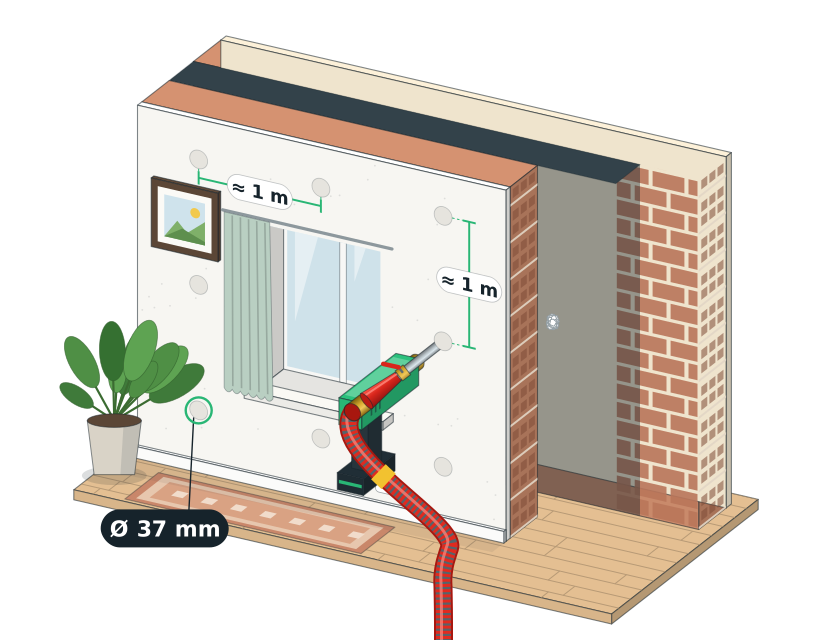
We fill the cavity with mineral wool through 37 mm holes, from outside or inside.
See how we do it ↓
Guide
False ceiling
€35–65/m² · up to 45 m² a day
We blow mineral wool in above the false ceiling, usually through the light fittings. We also work with cellulose.
False ceiling insulation →
Guide
Attic floor
€30–45/m² · 1 to 2 days
When there is no way into the attic, we go in through the roof and blow in mineral wool or cellulose.
Attic insulation →
Prices include VAT. With the machine set up, we can do walls, false ceiling and attic in the same job.
What it is
Many homes in Portugal have cavity walls: two leaves of brick with an empty air gap in between. Blown-in insulation, also called injected or cavity wall insulation, fills that gap with mineral wool flakes, blown in by a machine through small holes. The wall is insulated over its full height: your home stays warmer in winter and cooler in summer, without losing any space.
€20–45/m² incl. VAT · 1 to 3 days · cavity from 4 cm. Is my wall suitable? →

Best for: Houses and apartment buildings, when you want every wall insulated without work inside the home.
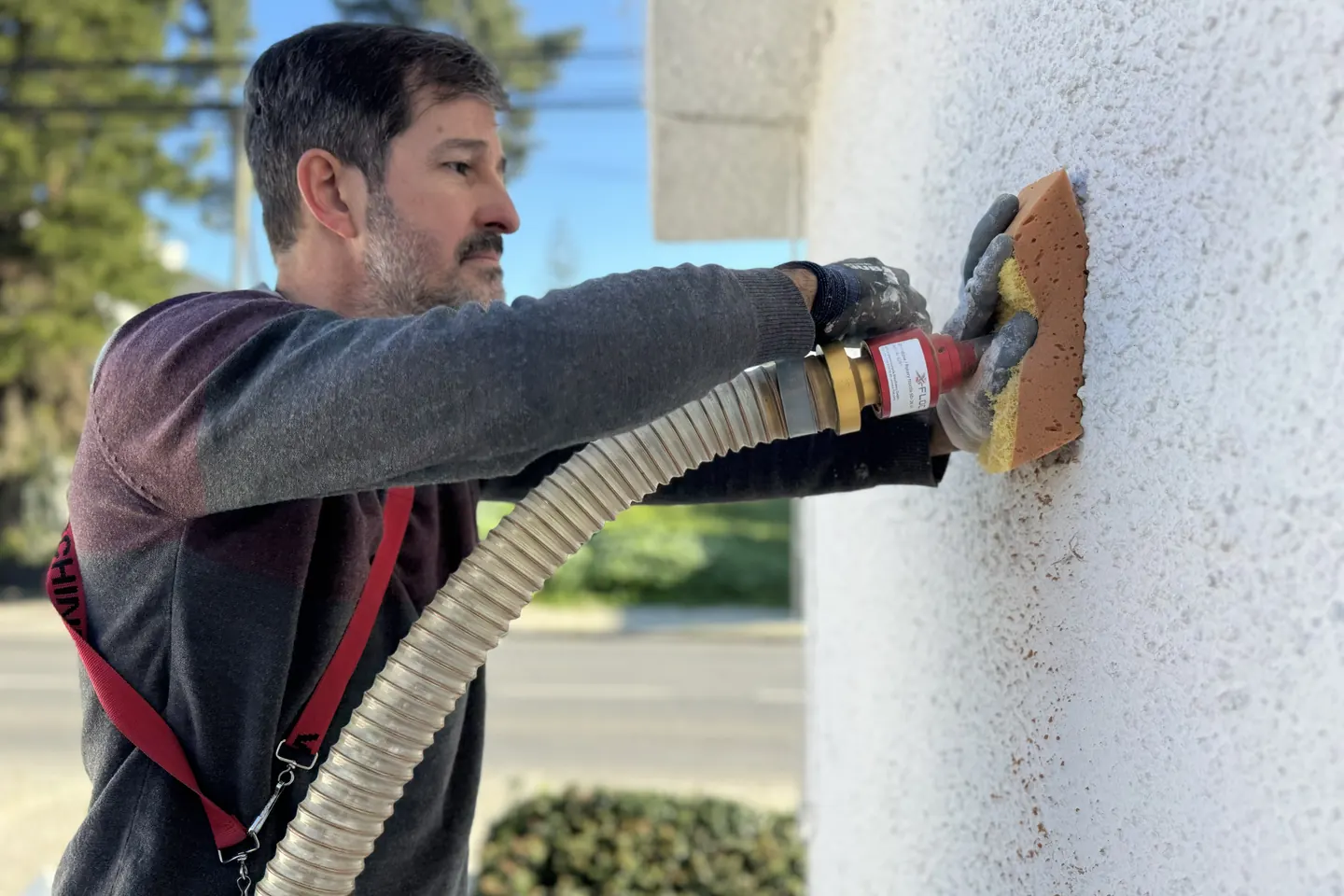
Keep in mind: At the end, the holes are closed and the façade is ready to paint. Then you choose: paint it yourself, or we do it, quoted separately.

Best for: Flats, or when you only want one or two rooms insulated, without having to paint the whole façade.
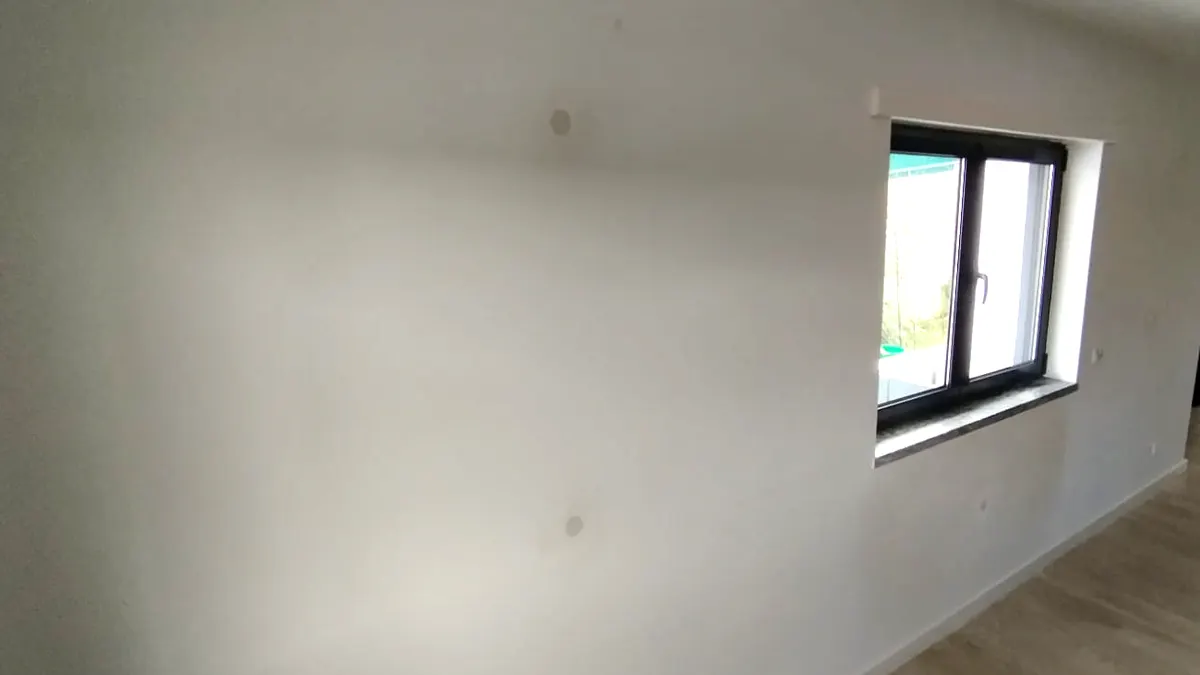
Keep in mind: We work inside your home and clean up at the end. The holes are closed and the walls ready to paint: paint them yourself, or we do it, quoted separately.
How we do it
Free
We look inside the cavity
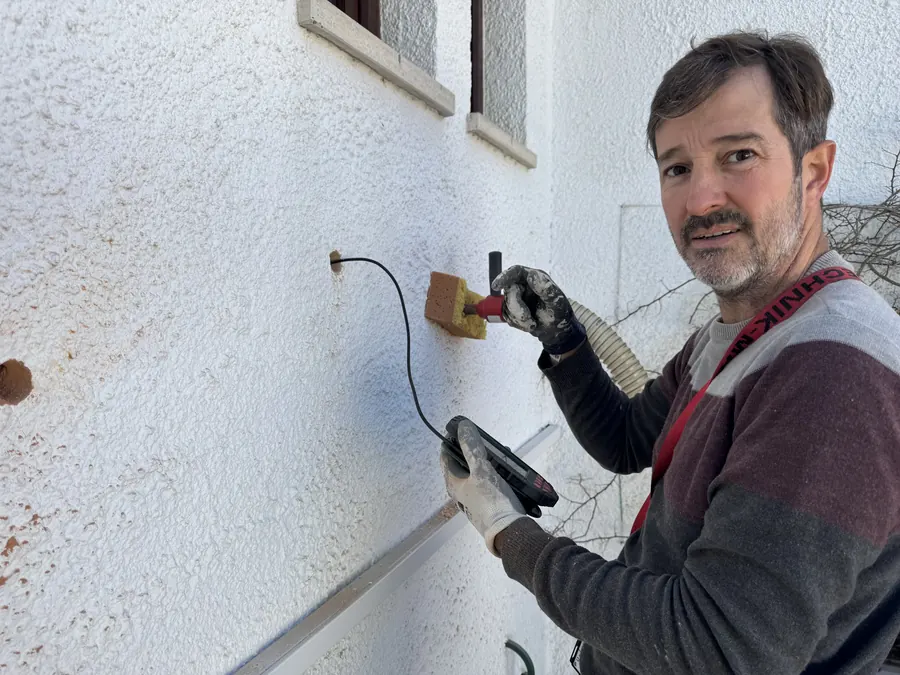
At the technical visit we drill a small hole and look inside the wall with a camera: whether there is a cavity, how wide it is and whether it is empty.
37 mm holes
We drill the wall
About one hole per m², about 1 m apart, from outside or inside. We decide together where.
1 to 3 days
We blow in the wool
The machine blows mineral wool through each hole and the cavity fills from the bottom up, at the density the manufacturer specifies.
Included
We close the holes
We close every hole and clean up before we leave. The wall is left ready to paint; if you prefer, we paint it too, quoted separately.
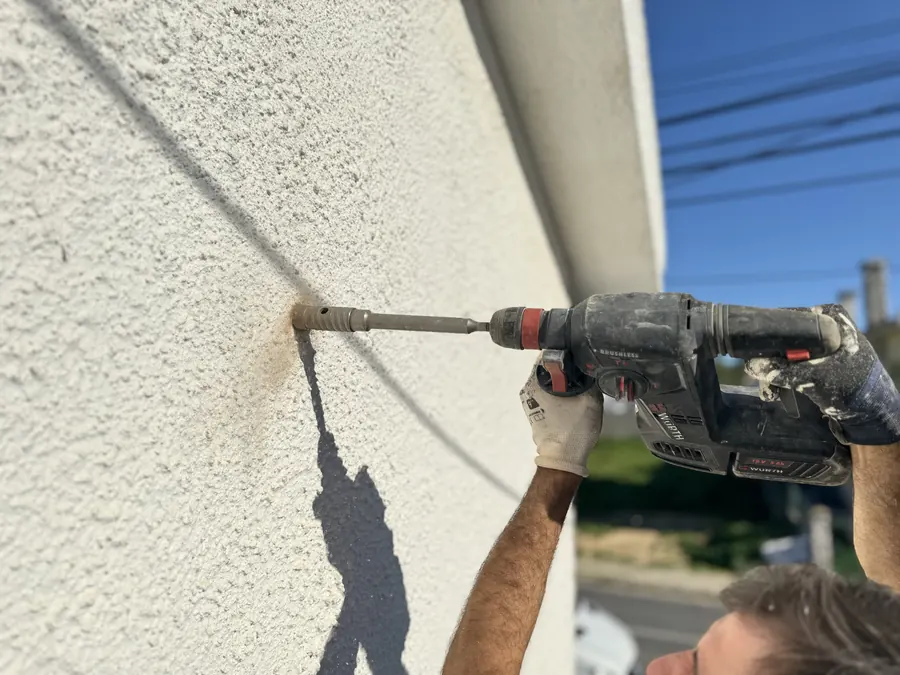
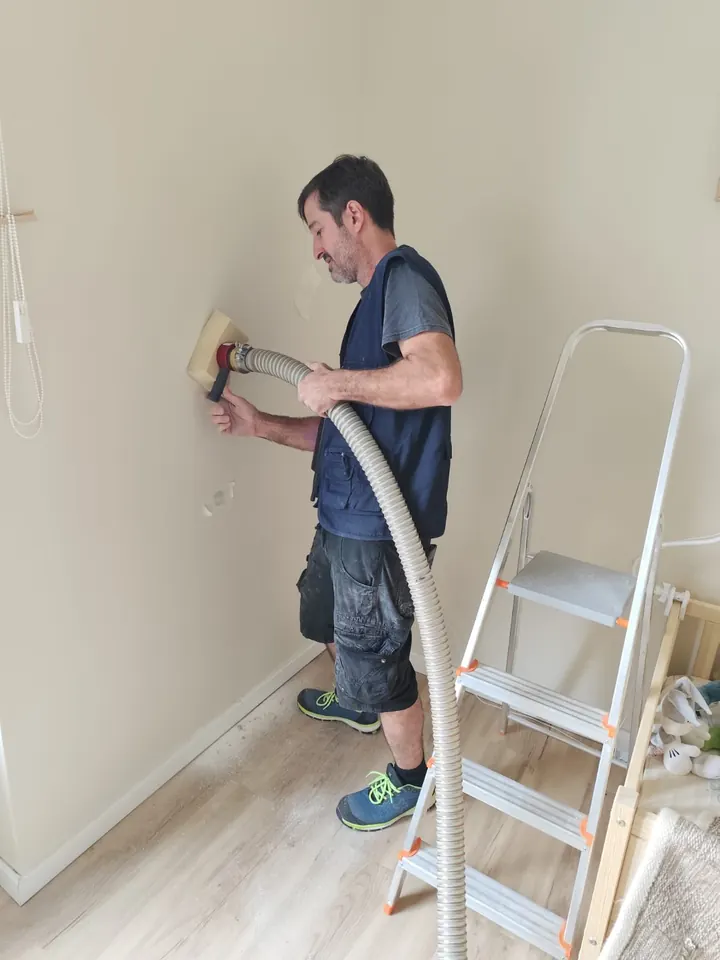
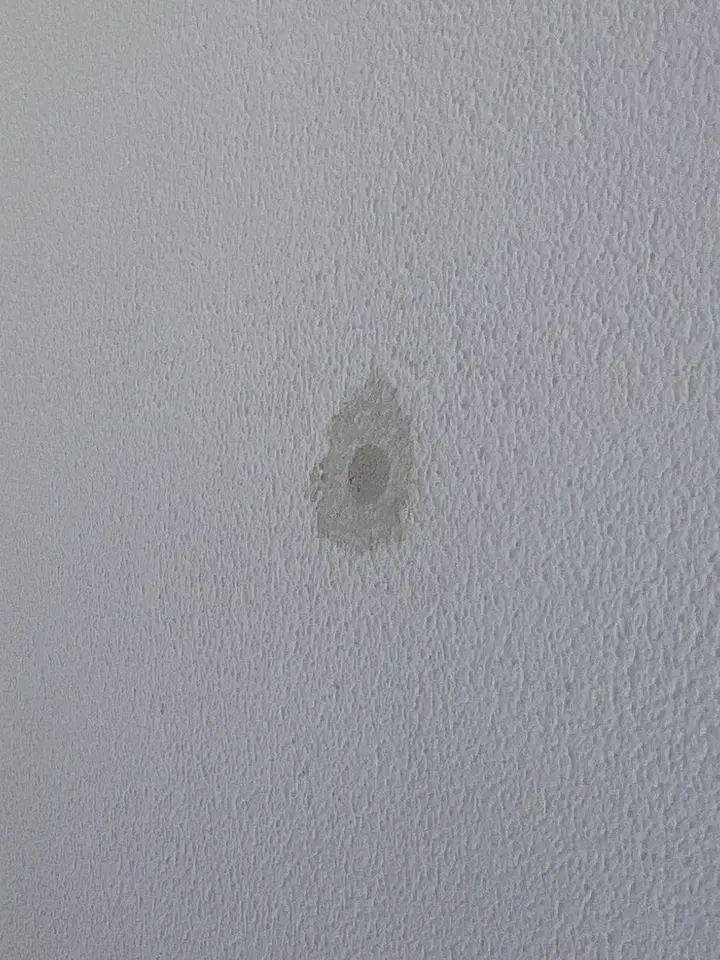
A typical home is done in 1 to 3 days. On the first day we do about 50 m² while we set everything up; after that 100 to 150 m² a day, depending on the width of the cavity.
“I contacted EnergyEase to blow insulation into the outside walls of my flat. […] The work was done within the estimated schedule and, at the end, the technicians cleaned up the debris both in the flat and in the entrance hall of the building.”
Tomás F. · Google, translated from Portuguese
“[…] I would also like to highlight the excellent finishes: the holes made in the ceiling were completely concealed, and the walls were repaired and painted with great care.”
Tomás M. · Google, translated from Portuguese
“Four months after we insulated the walls and the attic, the thermal comfort in the house has improved a lot. […] Very helpful and quick in carrying out the work, meeting the agreed deadlines.”
Mario C. · Google, translated from Portuguese
Before you ask for a quote
Blown-in insulation needs a cavity. If you do not know what you have, that is fine: we check with the camera at the visit.
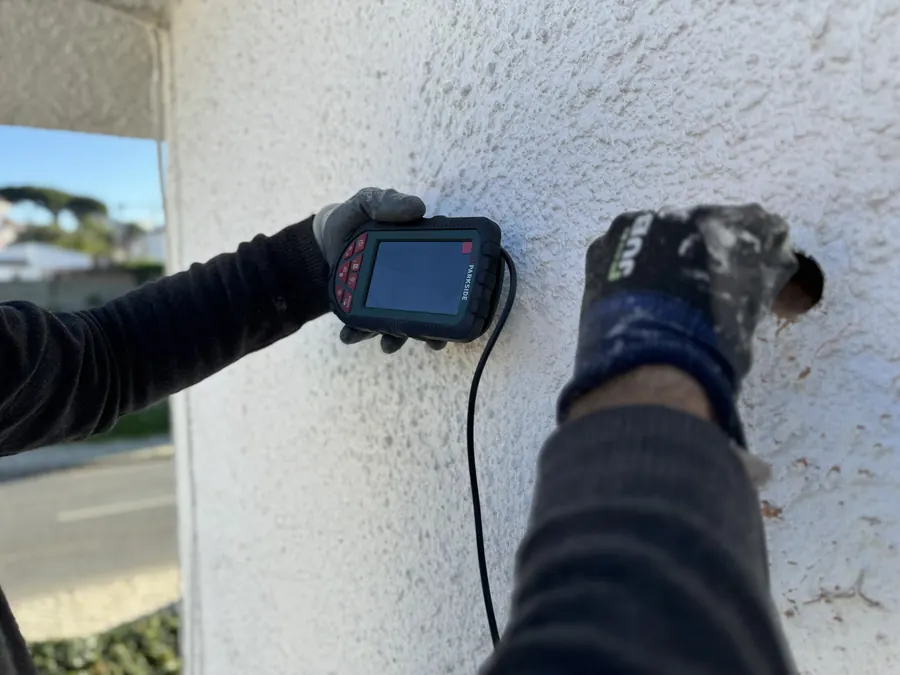
Suitable
Not suitable
Not sure which wall you have? See how to tell in the wall insulation guide. We also blow insulation into false ceilings and attic floors.
The material
In walls we almost always use Knauf Supafil 033: glass mineral wool flakes, developed to fill the cavities of existing walls.

What the data sheet says
What about cellulose or cork?
The usual doubts
It is the question we hear most, and a fair one. The short answer: with the right material and a wall in good condition, no.
A study by Delft University of Technology commissioned by the Dutch government, where cavities have been filled for decades, concluded that with a suitable material the risk of rain getting through does not increase, and that ventilating the cavity helps very little. See the study
Then the cause is fixed first: open joints, cracks, gutters or a leak. We only insulate a dry wall. At the visit, the camera shows us the state of the cavity. Condensation or a leak? →
Apartment buildings
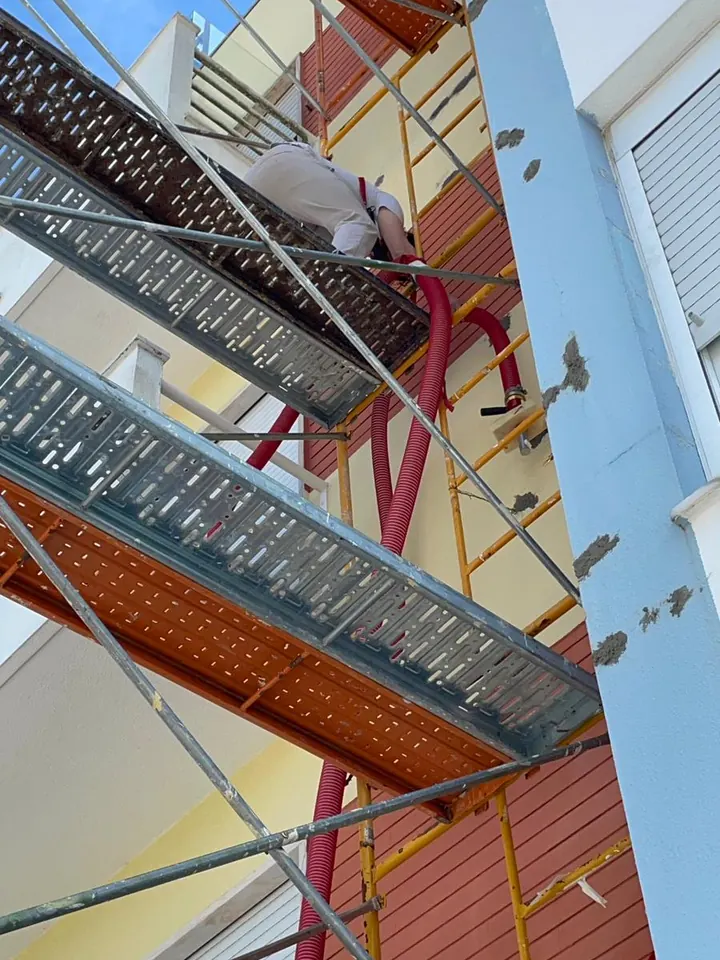
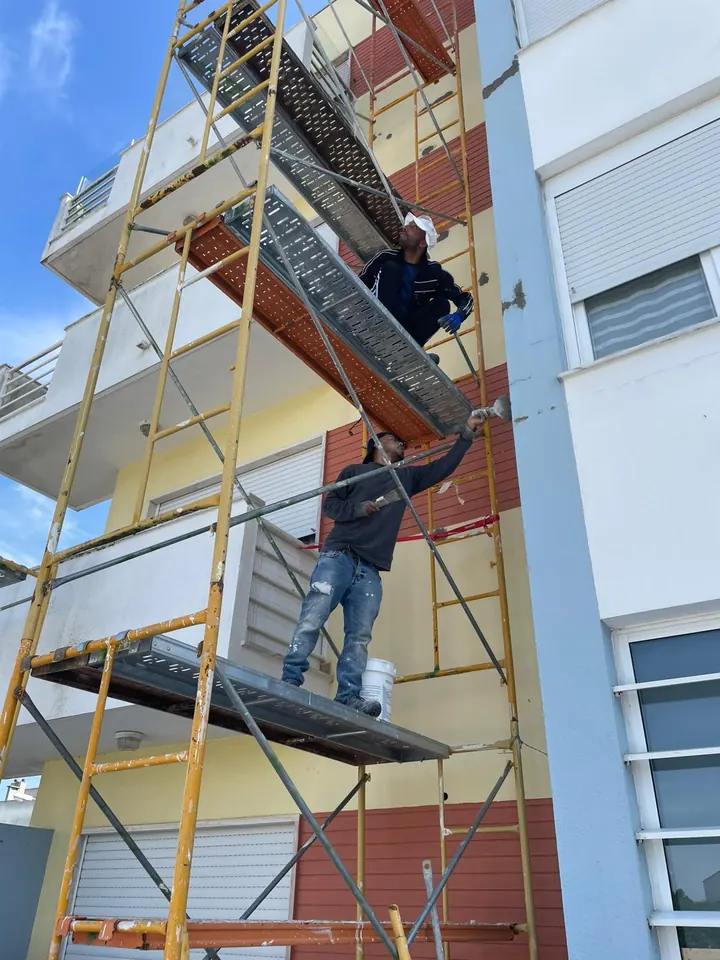
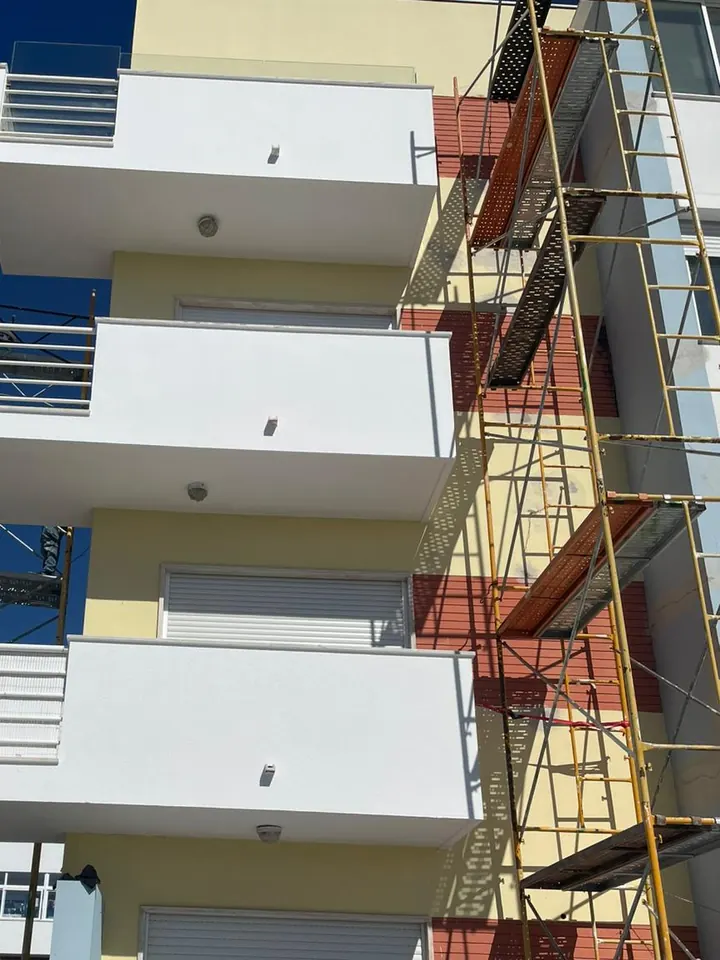
In an apartment building
In this building we filled the walls through the façade, from the scaffolding, closed the holes and the façade was painted afterwards. In a flat we can also fill just your own walls, from inside or outside. At the visit we tell you what needs the approval of the other owners.
Price
VAT included, holes closed. Per m², €20 to €45: the more wall, the lower the m² price, because travel and set-up cost almost the same on a small or a large job. The median across 67 projects was €38/m².
€1,050–1,600
About 35 m² of wall. Real job: Mafra, 37 m², €1,255.
€1,350–2,050
About 45 m² of wall. Real job: Almada, 45 m², €1,670.
€2,000–3,500
About 100 m² of wall. Real job: Sintra, 86 m², €3,063. With capoto, the same house costs €7,000 to €10,000.
See the table of finished projects by municipality in the wall insulation guide and the prices of every technique on insulation prices. The final price comes in the written quote, after the visit.
To bring the m² down
Do the whole house at once and combine walls, false ceiling and attic in the same job: travel and set-up are paid only once.
Free visit and quote
At the visit we look inside the cavity with a camera and measure the walls. The written quote usually follows within 48 hours, with no obligation.
At the free visit we look inside the wall with a camera, measure and send a written quote, usually within 48 hours. No obligation.
Compare
We do both. Capoto is the most complete solution; blown-in is the more affordable alternative when the wall has a cavity.
Capoto (ETICS)
€70–100/m² · 3 to 6 weeks
Blown-in
€20–45/m² · 1 to 3 days
Capoto: price per m² and timings → Blown-in or capoto: how to decide →
FAQ
Another question? Call us on 210 270 937 or message us on WhatsApp.
It means filling the cavity of an existing cavity wall with insulation. A machine blows mineral wool flakes through 37 mm holes until the cavity is full. It is also called injected insulation or cavity wall insulation.
In a typical home, €20–45 per m² of wall, VAT included, holes closed. A 1 or 2-bedroom flat usually comes to €1,050 to €1,600; a house with about 100 m² of wall, €2,000 to €3,500.
At the free technical visit we drill a small hole and look inside the wall with a camera. That tells us whether there is a cavity, how wide it is and whether it is empty.
A typical home is done in 1 to 3 days. On the first day we do about 50 m², then 100 to 150 m² a day.
With the right material and a wall in good condition, no. The mineral wool we use is water-repellent and vapour-open, and a study by Delft University of Technology concluded that with a suitable material the risk of rain getting through does not increase. If there is damp already, the cause is fixed first.
Blown in at the density the manufacturer specifies, no. The wool we use has settlement class S1: under 1%.
The 37 mm holes are closed, and that is included in the price. Once the wall is painted, you no longer see them. You can paint it yourself or ask us to, quoted separately.
Yes. We can fill just your own walls, from inside or outside. At the visit we tell you what needs the approval of the other owners.
Capoto is the most complete, because it wraps the whole façade and cuts the thermal bridges, but it costs €70–100/m² and takes weeks. If the wall has a cavity, blown-in costs about half and is done in days.
Because the outer leaf of the wall gets rain, and cellulose absorbs that moisture, clumps and loses its insulating value. In walls we use water-repellent mineral wool; cellulose is for false ceilings and attics.
No. The technical visit, with the camera, and the quote are free and without obligation. The written quote usually follows within 48 hours.
Keep reading
Wall insulation
Which wall you have, and which of the three options suits it.
Read more →
Capoto (ETICS)
Prices, materials and timings of external insulation.
Read more →
False ceiling insulation
We blow insulation in above your existing false ceiling.
Read more →
Attic and roof
Blankets, blown wool or the roof insulated from inside.
Read more →

We fill cavity walls in Lisbon, Cascais, Oeiras, Sintra, Almada and Setúbal
Free visit, quote usually within 48 hours
Don't just take our word for it - hear from those who have experienced the EnergyEase difference.


